

Interior wall renovation often leads homeowners and designers to weigh up wallpaper and wall panels. Though both finishes can completely refresh a room’s appearance, their practical traits set them apart significantly.
Wallpaper focuses primarily on decoration. With countless colorways and printed patterns available, it is an easy way to bring a specific design vision to life. Wall panels combine decorative appeal with sturdy physical performance. Different material options deliver added advantages such as moisture resistance, impact protection and improved long-term durability.
Picking between wallpaper and wall panels requires careful thought. Factors including wall condition, space usage lifespan, anticipated wear, installation requirements and design goals all shape the right decision.
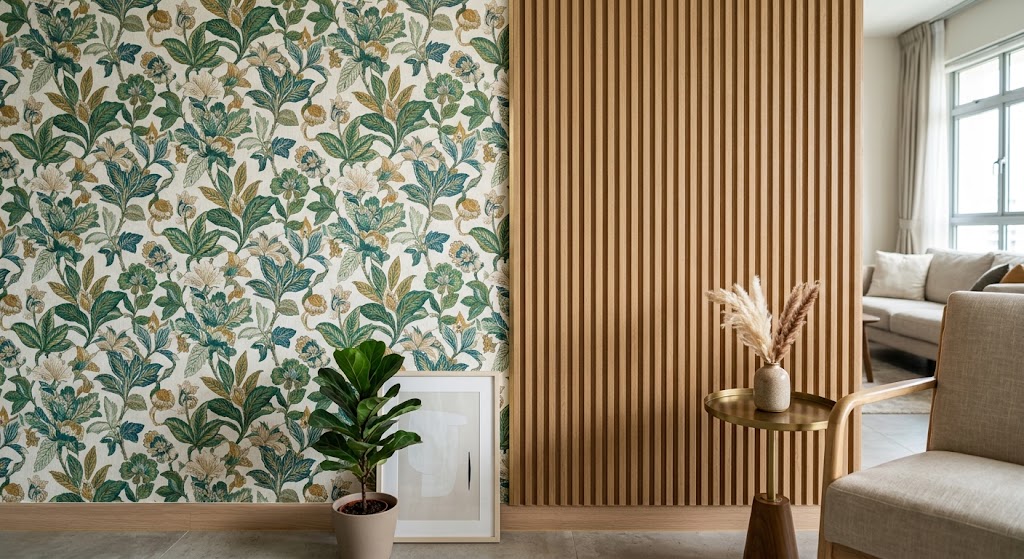
Wallpaper vs Wall Panels: Key Differences
Before choosing a material, it helps to look at the main differences.
| Factor | Wallpaper | Wall Panels |
| Primary purpose | Decorative wall covering | Decorative finish + surface protection |
| Design options | Extensive patterns, prints, and colors | Wood, stone, fluted, textured, and other finishes |
| Moisture resistance | Depends on wallpaper type | Depends on panel material; some offer high moisture resistance |
| Impact resistance | Generally limited | Generally higher with suitable panel systems |
| Installation | Usually adhesive or paste | Glue, click-lock, or other fixing systems |
| Wall condition | Best on smooth, prepared walls | Can cover some minor surface imperfections when properly installed |
| Maintenance | Cleaning depends on wallpaper material | Many panels are relatively easy to clean |
| Commercial applications | Suitable for selected interiors | Widely used in hospitality, retail, office, and other commercial spaces |
| Design effect | Flat decorative surface | Can provide texture and three-dimensional effects |
This comparison gives you the basic picture: wallpaper focuses more on decorative flexibility, while wall panels can combine appearance with physical surface performance.
When Is Wallpaper a Better Choice?
Wallpaper can still be a very practical solution, especially when appearance and flexibility are the main priorities.
1. Short-Term or Budget-Conscious Renovations
If you’re renovating a rental property, temporary accommodation, or a space that may be redesigned in a few years, wallpaper can make sense.
The initial material and installation cost can be relatively accessible, depending on the product and project requirements. It can also be easier to change the interior style later without committing to a more substantial wall finishing system.
For projects where the expected service period is relatively short, this flexibility can be valuable.
That doesn’t mean wallpaper is only for low-budget projects. High-end hotels, restaurants, and residential interiors also use premium wallpaper. The key question is how much long-term surface performance the project actually needs.
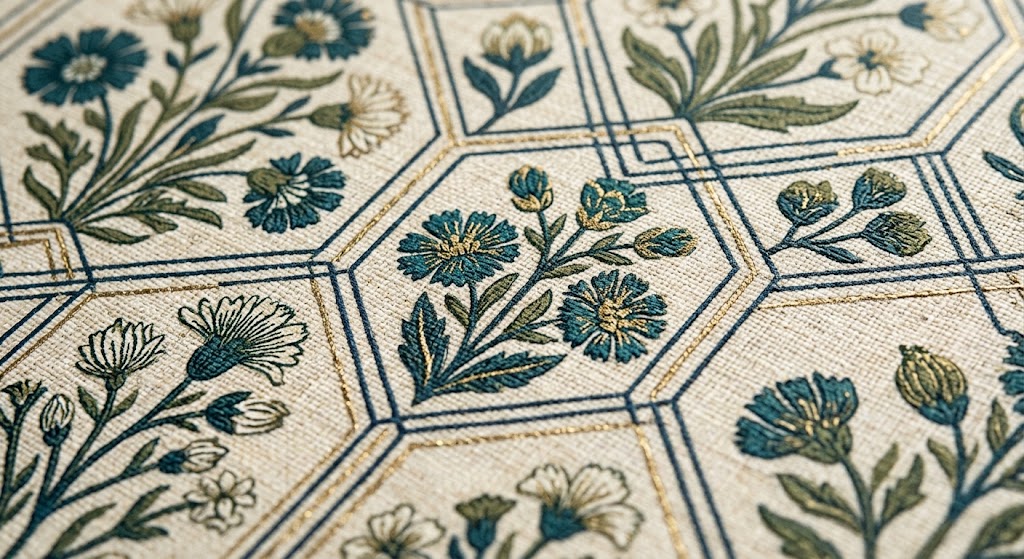
2. Projects That Prioritize Decorative Variety
This is where wallpaper really stands out.
Wallpaper is available in an enormous range of colors, patterns, prints, and visual effects. You can find subtle neutral tones, geometric patterns, floral designs, vintage styles, marble effects, textured surfaces, and even customized graphics.
If the design concept changes frequently, wallpaper gives designers plenty of room to experiment.
For example, a boutique hotel may use different wallpaper patterns in different rooms, while a retail space may use a customized graphic wall to reinforce its visual identity.
In other words, if pattern variety and visual customization are your biggest concerns, wallpaper deserves serious consideration.
3. Smooth, Well-Prepared Walls
Wallpaper works particularly well when the existing wall is already smooth, clean, dry, and structurally sound.
In this situation, the wall may only need appropriate surface preparation before the wallpaper is applied.
However, wallpaper is not a shortcut around poor wall preparation. Cracks, moisture problems, dust, uneven surfaces, or loose coatings can affect adhesion and the final appearance.
So, if the wall is already in good condition and you mainly want a new decorative finish, wallpaper can be a straightforward option.
When Are Wall Panels a Better Choice?
Wall panels become more attractive when the project requires more than a decorative surface.
1. Long-Term Residential or Commercial Interiors
For long-term interiors, durability becomes much more important.
Think about areas where walls are touched, bumped, cleaned, or exposed to everyday activity. Hotels, restaurants, offices, retail stores, corridors, and family homes can all experience considerably more wall contact than a low-use decorative space.
Depending on the material and construction, wall panels can offer resistance to moisture, scratches, impact, and everyday wear.
This is particularly useful when the wall finish needs to maintain its appearance over an extended service period.
For residential applications, wall panels can also be considered in homes with children or pets, where walls may experience more accidental contact.
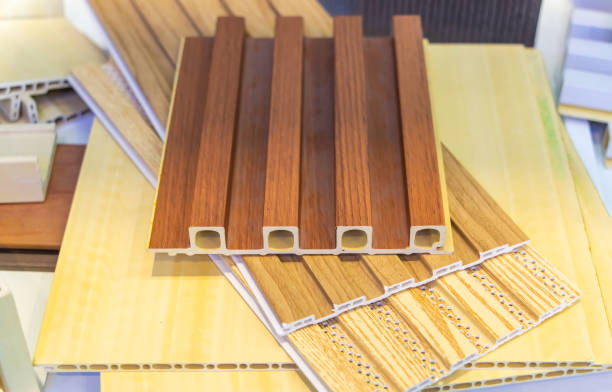
2. Renovation Projects Requiring Surface Coverage
Old walls don’t always look perfect.
Cracking, peeling finishes, stains, uneven surfaces, and other minor imperfections can make renovation more complicated. When the existing substrate is suitable and properly prepared, wall panels can create a new finished surface that covers some minor visual imperfections.
This can be especially useful in renovation and commercial fit-out projects.
However, there is an important distinction: wall panels should not be used to hide serious structural problems or active moisture issues. Significant cracks, dampness, mold, or unstable substrates should be addressed before installation.
The installation system also matters. Depending on the product, wall panels may be installed using adhesive, mechanical fixing, or click-lock systems.
3. Interiors That Require a More Structured Look
If you want a wall to become part of the architecture rather than simply a decorated surface, wall panels offer more possibilities.
Fluted wall panels, wood-look finishes, stone textures, and other three-dimensional surfaces can add depth and visual structure to an interior.
They can be used for:
- Feature wall
- Reception areas
- Hotel interiors
- Restaurant interiors
- Office wall
- Retail displays
- Bedroom feature wall
- Living room accent wall
A fluted panel, for example, creates a physical rhythm across the wall. A wood-look panel can provide a warm material appearance, while stone-look finishes can create a more contemporary architectural style.
This dimensional effect is one of the main differences between wall panels and conventional wallpaper.
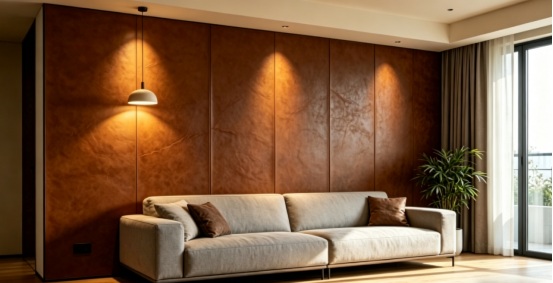
Wallpaper vs Wall Panels for Different Interior Spaces
The best choice can also change depending on where the material will be used.
Bedrooms and Living Rooms
Both options can work well in residential living spaces.
Wallpaper may be preferable when the main goal is decorative variety and frequent style changes. Wall panels may be more suitable when the homeowner wants a stronger architectural appearance or additional surface durability.
Hotels and Hospitality Spaces
Hotels need to balance appearance, durability, maintenance, and long-term operating costs.
Wallpaper can be effective for bedrooms and selected decorative areas, particularly where pattern customization is important.
Wall panels can be considered for high-contact areas, feature walls, reception spaces, corridors, and other locations where surface durability and easy maintenance are important.
Offices
For offices, the choice often depends on the design concept and traffic level.
Wallpaper can create a branded or visually distinctive environment. Wall panels can provide a more structured appearance while offering additional resistance to everyday wear.
Retail and Commercial Interiors
Retail spaces often require strong visual identity, but they also experience frequent customer and staff activity.
Wallpaper may be suitable for decorative feature areas or spaces where graphics are a priority. Wall panels can be useful where the wall finish needs to withstand regular contact and cleaning.
Which Is More Suitable for Moisture-Prone Areas?
Moisture resistance is another factor worth looking at carefully.
Traditional wallpaper is not automatically suitable for wet or humid environments. Some specialized wallpaper products have improved moisture resistance, but their performance depends on the specific material and installation system.
Wall panels can provide a stronger option when moisture resistance is a project requirement, but again, performance depends on the panel construction.
For example, certain SPC wall panels are designed with water-resistant properties that make them suitable for interior areas where exposure to moisture is a concern.
However, product specifications should always be checked rather than assuming that every wall panel is waterproof.
The substrate, joints, installation method, and surrounding construction also influence the overall moisture performance of a finished wall system.
Maintenance and Long-Term Use
Maintenance is easy to overlook when choosing a wall finish.
A material may look great on installation day, but commercial interiors have to deal with cleaning, accidental impacts, stains, and everyday wear over time.
Wallpaper can be relatively easy to maintain when the correct product is selected, but damaged sections may be more difficult to replace without creating visible differences in pattern, color, or texture.
Wall panels can offer a different maintenance approach. Depending on the panel system, individual sections may be easier to remove or replace, while many smooth panel surfaces can be cleaned with standard methods recommended by the manufacturer.
For commercial projects, it’s useful to look beyond the initial material price and consider the total lifecycle cost, including installation, cleaning, repairs, replacement, and expected service life.
Conclusion: Wallpaper vs Wall Panels
Wallpaper and wall panels are not necessarily competing materials. They solve different interior design and performance requirements.
Wallpaper is particularly strong in decorative flexibility, pattern variety, and visual customization. It can be a practical choice for short-term renovations, well-prepared walls, and spaces where changing the design is important.
Wall panels offer a combination of decorative appearance, surface durability, moisture resistance options, and dimensional design. Depending on the material, they can be well suited to long-term residential interiors, hospitality projects, offices, retail spaces, and other commercial environments.
If you’re selecting materials for a project, don’t make the decision based on appearance or initial price alone. Consider the wall condition, expected service life, traffic level, moisture exposure, maintenance requirements, installation method, and overall lifecycle cost.
For projects where durability and architectural wall design are important, WPC and SPC wall panels provide a range of surface finishes and installation options for modern interior applications.