

Aluminum Honeycomb Panels: Complete Guide to Structure, Types & Buying
Aluminum honeycomb panels have quietly become one of the go-to materials for architects and contractors who need strength without the weight. They offer a high strength-to-weight ratio, excellent flatness, Class A fire performance, and real design flexibility. This guide walks you through the structure, how they’re made, the main types, finishes, benefits, limitations, key comparisons, real-world applications, and a practical buying process so you can specify them with confidence.
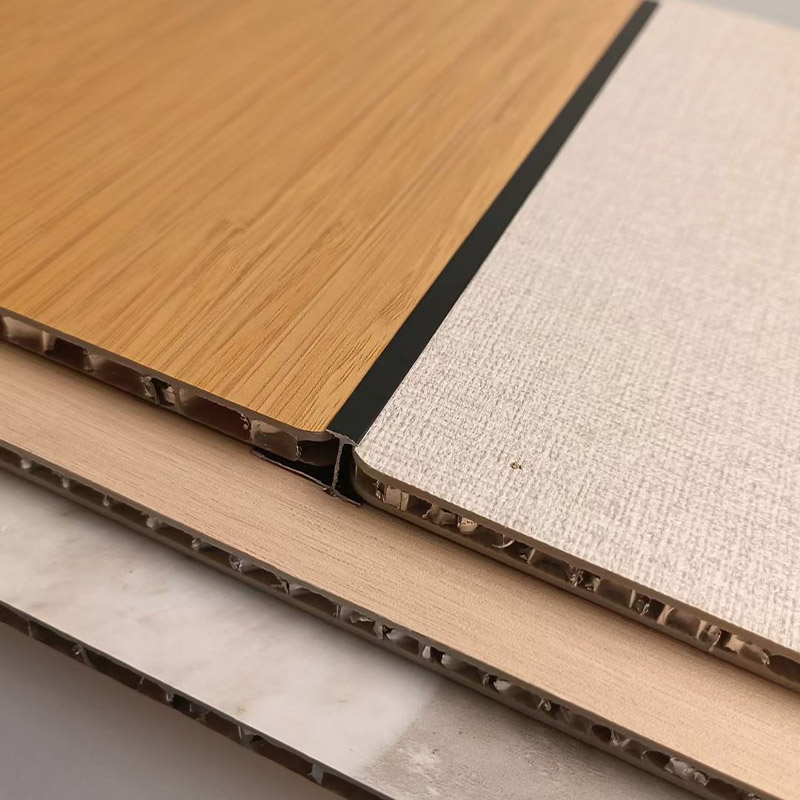
Table of Contents
What Is an Aluminum Honeycomb Panel?
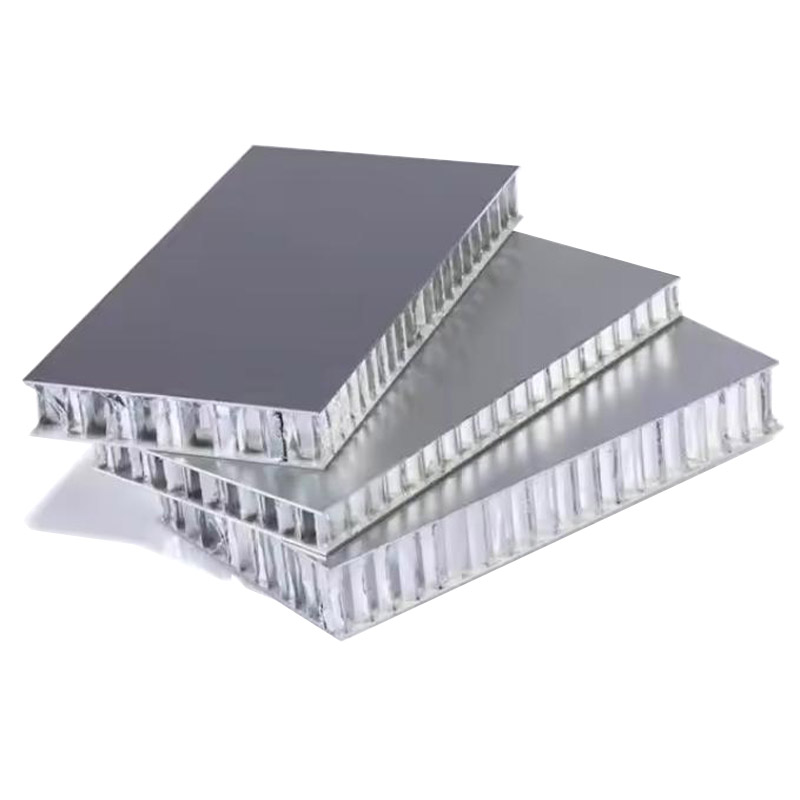
An aluminum honeycomb panel is a lightweight sandwich composite made by bonding two thin aluminum face sheets to a hexagonal aluminum honeycomb core. The idea comes straight from nature—the same geometry bees use. The result is a rigid, flat panel that weighs far less than solid aluminum of the same thickness while delivering higher bending stiffness and better dimensional stability.
You’ll see these panels used for façade cladding, interior partitions, elevator cab lining, clean-room walls, ceilings, and even furniture components. Manufacturers like Huigong supply them in custom sizes with a range of surface finishes, Class A or B1 fire ratings.
How Does the Honeycomb Structure Work?
The hexagonal cells create thousands of tiny closed air chambers. Once the face sheets are bonded on, the whole thing acts like a series of miniature I-beams. Loads get spread evenly across the surface, giving high compressive and flexural strength while keeping density low. Those trapped air pockets also help with thermal insulation and acoustic damping—pretty useful in real projects.
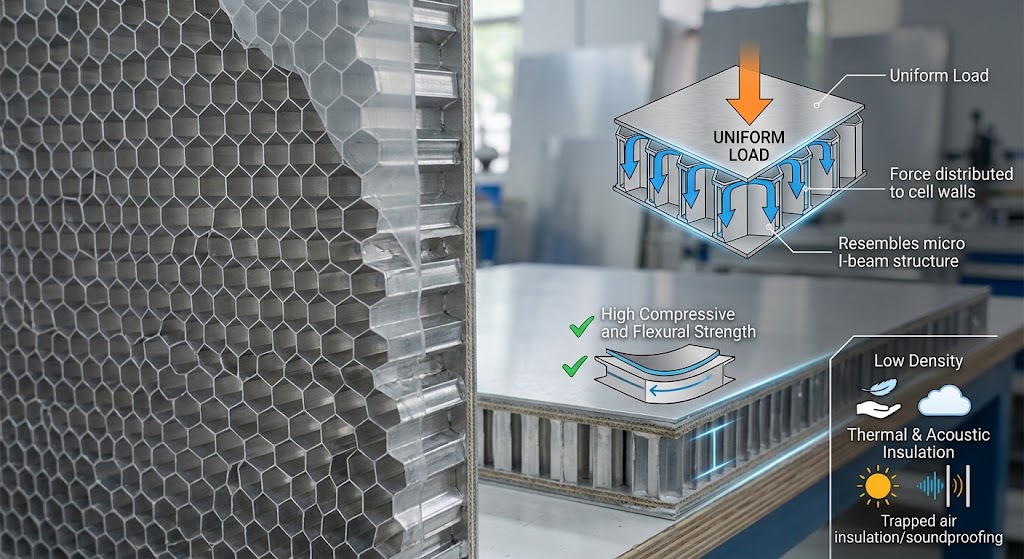
Aluminum Honeycomb Panel Structure
A standard aluminum honeycomb panel has four main parts:
- Aluminum Face Sheet
Thin aluminum alloy sheets (usually 0.3–1.0 mm) form the outer skins. Thicker gauges give better impact resistance and keep large panels flatter. The face sheet thickness is one of the first things you decide based on how the panel will be used. - Aluminum Honeycomb Core
This is the aluminum foil formed into precise hexagonal cells. Common cell sizes are 6 mm, 8 mm, and 10 mm. Smaller cells mean higher density and strength; larger cells keep the panel lighter and more cost-effective. Core thickness largely sets the overall panel thickness and stiffness. - Bonding Layer
High-performance adhesives or specialized resins permanently join the face sheets to the core under heat and pressure. Bond quality is critical—poor bonding leads to delamination over time. - Surface Finish
The visible side (or both sides) gets a protective and decorative coating or laminate. Options range from PVDF and polyester to anodized, mirror, brushed, or SPC decorative layers.
How Are Aluminum Honeycomb Panels Made?
The process is tightly controlled to keep quality consistent.
- Aluminum Sheet Preparation: Coils are uncoiled, cleaned, and cut. Surface preparation removes oils and oxides so the adhesive can grab properly.
- Honeycomb Core Manufacturing: Aluminum foil is expanded or corrugated into hexagonal cells and then cut to the required thickness. Cell size and foil gauge are held to tight tolerances.
- Surface Treatment: Face sheets may receive primer or chemical conversion coating depending on the final finish.
- Panel Bonding: The sheets and core go into a press. Heat and pressure activate the adhesive and create the permanent sandwich. Double-sided panels get faces on both sides in one or sequential cycles.
- Cutting and Quality Inspection: Panels are trimmed to final size. Every batch is checked for flatness, bond strength, dimensions, and appearance. Fire, formaldehyde, and mechanical tests follow project or certification requirements (ISO 9001, SGS, CE).
Types of Aluminum Honeycomb Panels
Single-Side Aluminum Honeycomb Panel
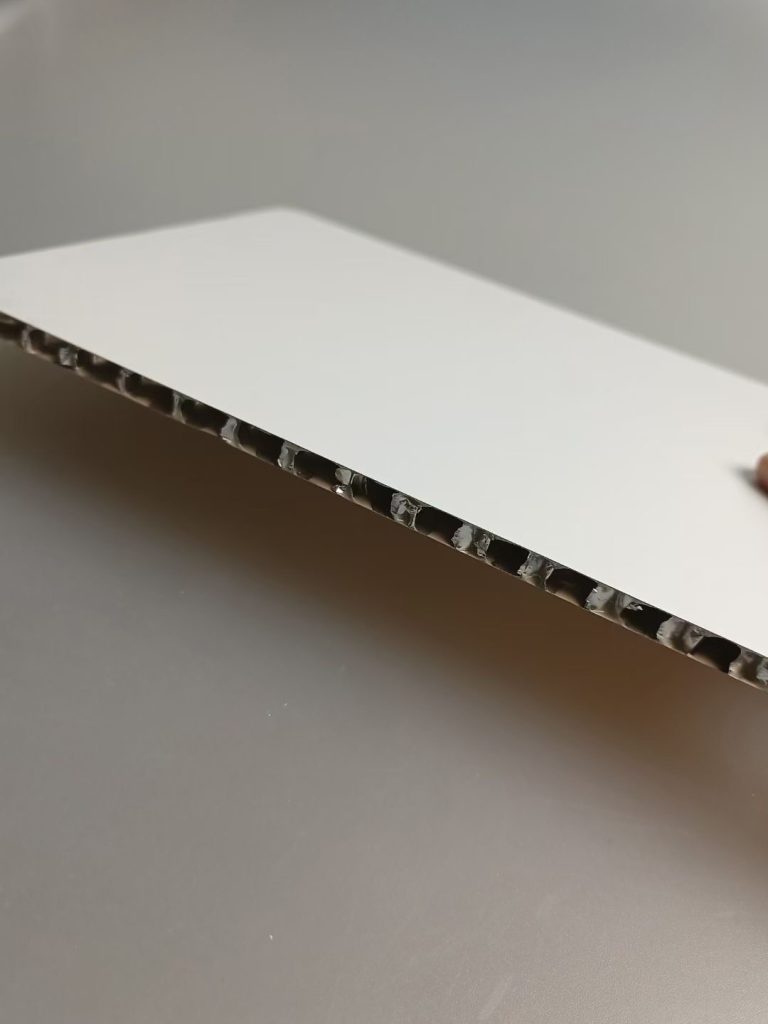
One decorative face is bonded to the core; the back stays open or gets a plain backing. Weight usually sits between 3–8 kg/m². It’s lighter and more economical—perfect for wall lining, ceilings, and display surfaces where only one side shows. The open back is handy for running cables or adding insulation.
Double-Side Aluminum Honeycomb Panel
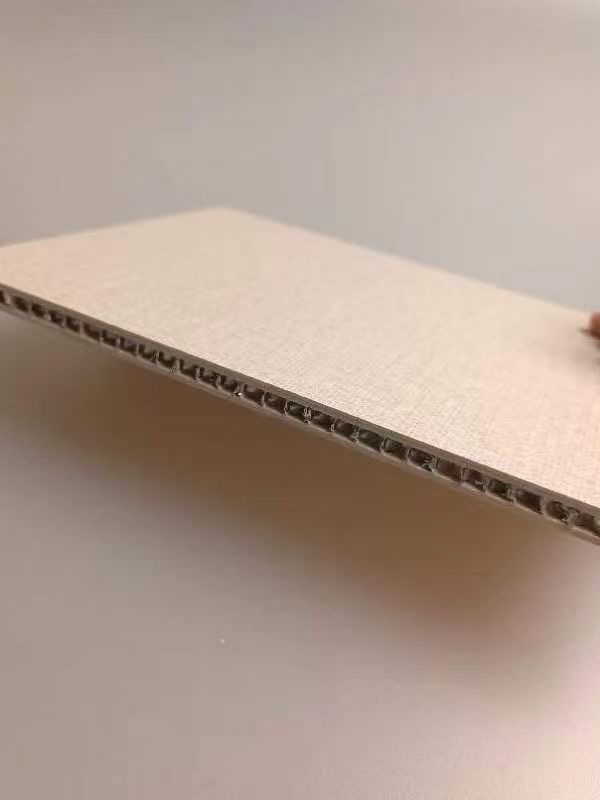
Decorative faces go on both sides. Weight typically ranges from 5–12 kg/m². The symmetrical build gives maximum rigidity, stops warping, and leaves a finished look on both faces. This is the go-to for elevator interiors, freestanding partitions, cabinet doors, and ceiling tiles.
Full Aluminum Honeycomb Panel
Both skins and the core are pure aluminum. This all-metal version can get down to about 1.5 kg/m² in certain specs while still delivering top rigidity and Class A fire performance. It’s popular for interior cladding, furniture panels, and commercial renovations.
Aluminum Honeycomb Panel Surface Finishes
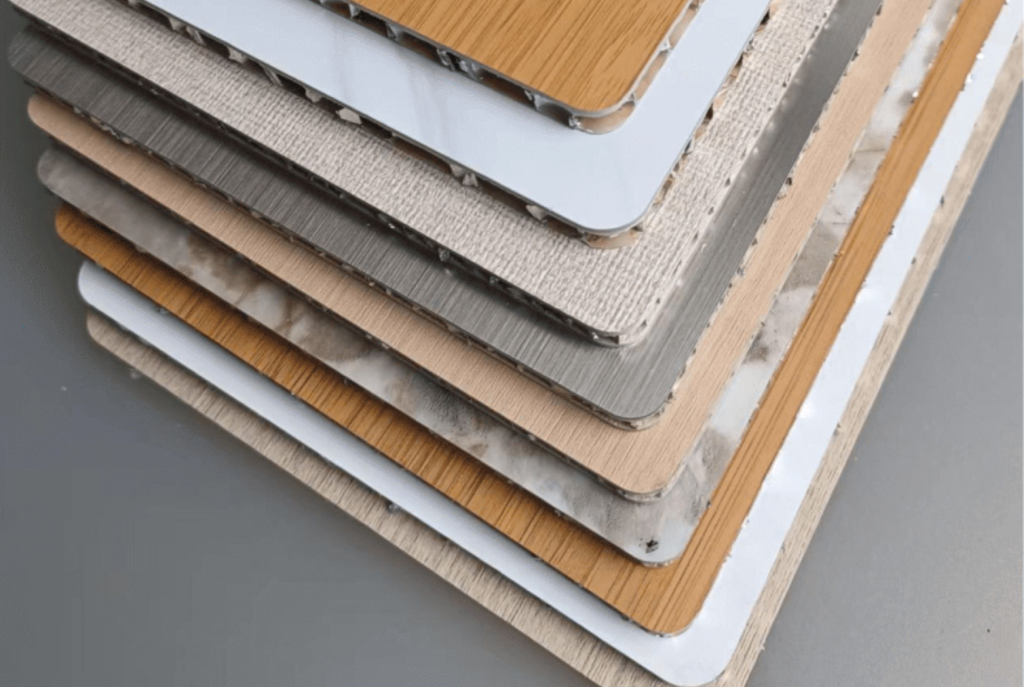
- Anodized
An electrochemical process creates a hard oxide layer. You can get natural or colored finishes with strong abrasion and corrosion resistance plus a clean metallic look. - Mirror
Highly polished aluminum creates a reflective surface. Elevator cabs, feature walls, and retail spaces love this one. - Brushed
A directional satin finish that hides fingerprints and light scratches while giving a modern industrial feel. - SPC-Faced
An SPC (stone plastic composite) decorative layer is bonded onto the honeycomb substrate. You get realistic wood, stone, or texture looks while keeping the structural benefits of the aluminum core.
Key Benefits of Aluminum Honeycomb Panels
Lightweight
These panels can weigh as little as one-fifth to one-third of solid aluminum with the same stiffness. That cuts structural loads and makes handling and installation a lot easier.
High Rigidity and Strength
The sandwich construction produces high bending stiffness and compressive strength, so large spans stay flat with minimal deflection.
Dimensional Stability
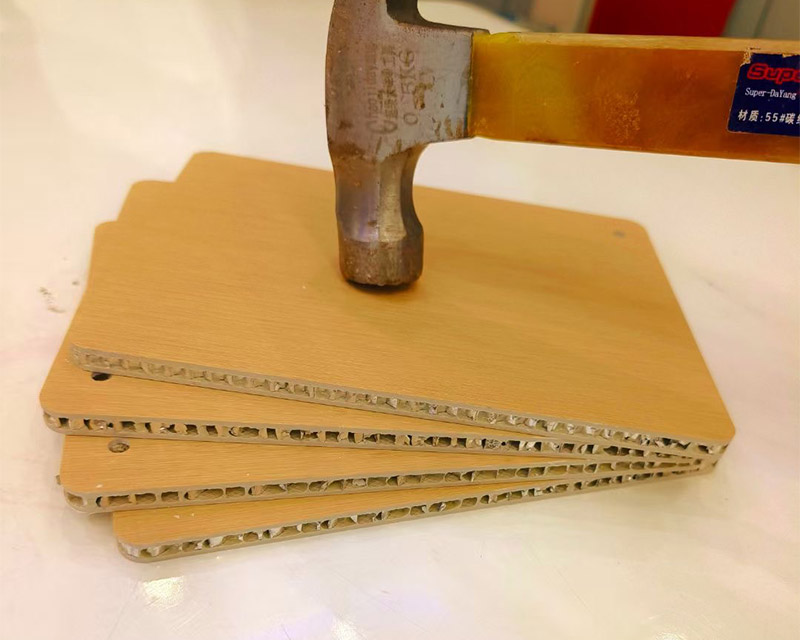
Closed cells and symmetrical skins keep expansion, contraction, and warping under control when temperature and humidity change.
Fire Resistance
Aluminum itself is non-combustible. Properly specified panels reach Class A (non-combustible) or Class B1 ratings, which meets strict codes for commercial buildings, hospitals, and hotels.
Moisture and Corrosion Resistance
With the right finish and sealed edges, the aluminum skins resist moisture absorption and corrosion.
Thermal and Acoustic Performance
Air trapped in the cells provides useful thermal resistance and sound damping—handy for partitions, meeting rooms, and clean rooms.
Design Flexibility
Custom sizes, thicknesses, finishes, and single- or double-sided options give designers plenty of room to work.
Limitations of Aluminum Honeycomb Panels
Initial Cost
They cost more upfront than basic plywood, MDF, or standard aluminum composite panels. The premium makes sense only when the performance benefits are actually needed.
Edge Treatment
Edges have to be properly sealed or capped. Skip this step and moisture can get in and damage the core over time.
Specification Requirements
Wrong thickness, cell size, or face-sheet gauge can leave you with a panel that’s either too weak or heavier than it needs to be. Getting the specs right from the start matters.
Aluminum Honeycomb Panel vs Other Panel Materials
Honeycomb Panel vs ACP
Here’s where they really differ:
- Core and structure: ACP has a continuous polymer core. Honeycomb has discrete aluminum cells. That hexagonal geometry delivers noticeably higher specific stiffness.
- Weight: For the same or better rigidity, honeycomb panels are often lighter because most of the core volume is just air.
- Fire performance: Aluminum honeycomb cores are inherently non-combustible and easily hit Class A ratings. Standard PE-core ACP is combustible; only mineral-core (FR) versions get close to higher fire ratings—and they cost more.
- Flatness and span capability: Honeycomb panels stay flatter over larger spans and resist sagging better under their own weight or wind loads.
- Strength-to-weight ratio: Honeycomb wins on bending stiffness and compressive strength relative to mass.
- Cost: ACP is usually cheaper for simple decorative cladding. Honeycomb costs more but can save money later through reduced structural support and lower dead load.
- Fabrication: ACP is easier to route and bend on site. Honeycomb needs more careful cutting and edge treatment so you don’t crush the core.
- Best use cases: ACP works well when budget and easy fabrication are the top priorities. Honeycomb is the better choice for elevators, high-performance partitions, large flat interiors, fire-critical areas, and any job where you need maximum rigidity with minimum weight.
Bottom line: pick ACP when cost and workability come first. Go with aluminum honeycomb when structural performance, fire safety, and long-term flatness matter more.
Honeycomb Panel vs Solid Aluminum Panel
Solid aluminum is heavier and more expensive for the same stiffness. It also lacks the built-in thermal and acoustic benefits that the honeycomb core provides.
Honeycomb Panel vs Aluminum Sheet
Thin aluminum sheet simply doesn’t have the stiffness of a sandwich panel. It will oil-can or deflect under modest loads. The honeycomb core solves that by spacing the skins apart with a lightweight structure.
Aluminum Honeycomb Panel Applications
Interior Wall Cladding: Gives you flat, durable, easy-to-clean surfaces for offices, corridors, and feature walls.
Partitions: Lightweight yet rigid panels make clean demountable or fixed partitions with decent acoustic performance.
Elevator Interiors: Thin, fire-rated panels with mirror or brushed finishes maximize cab space while meeting strict weight and safety limits.
Hotels and Commercial Spaces: Custom colors and textures fit FF&E requirements for lobbies, retail, and hospitality renovations.
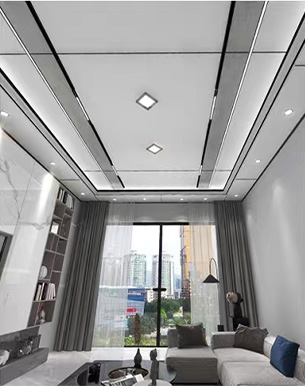
Ceiling Panels: Low weight reduces the load on the suspension system. Double-sided options give a finished underside.
Cabinets and Furniture: Rigid, lightweight doors and panels are easier on hardware and simpler to handle.
Cleanrooms and Medical Interiors: Smooth, non-porous, Class A surfaces support hygiene requirements and fire-code compliance.
How to Choose the Right Aluminum Honeycomb Panel?
Getting the right panel means matching the technical details to what the project actually needs. Here’s a practical way to walk through it.
Panel Thickness
Overall thickness (commonly 8–20 mm, sometimes more) mainly controls stiffness and insulation value. Thicker panels span farther and feel more solid. For most interior walls and partitions, 10–15 mm works well. Ceilings and furniture can go thinner. High-load or long-span applications usually need 15–20 mm or above.
Face Sheet Thickness
0.3 mm is fine for ultra-light interior ceilings. 0.5 mm is the everyday workhorse. 1.0 mm gives better impact resistance and is preferred for elevators, high-traffic walls, and exterior work. Heavier faces also support more aggressive surface treatments.
Core Cell Size
Smaller cells (6 mm) raise density, strength, and surface smoothness. Larger cells (8–10 mm) cut weight and cost. Choose smaller cells when the surface will be highly visible or the loads are higher. Larger cells work fine for non-critical interior lining.
Surface Finish
Match the environment. PVDF or anodized finishes handle exterior exposure and high-moisture areas. Mirror or brushed finishes suit elevators and feature walls. SPC-faced panels give realistic wood or stone looks while keeping the structural advantages of the honeycomb core.
Single-Side vs Double-Side
Go single-side when only one face shows and you want to save weight or cost. Specify double-side for freestanding partitions, elevator cabs, cabinet doors, or any application where both faces are exposed or you need maximum symmetry to prevent warping.
Fire Requirements
Confirm the required rating early. Most aluminum honeycomb panels can reach Class A non-combustible performance. Ask for the actual test reports (GB8624, EN 13501-1, or equivalent) and make sure the edge details don’t compromise the rating.
Panel Size
Standard maximums often sit around 2400 × 1200 mm. Custom sizes up to about 3600 × 1220 mm are usually available. Larger panels mean fewer joints, but they also need careful handling and transport planning. Factor in site access and the installation method when you lock in the dimensions.
A few extra practical checks: confirm how the edges will be sealed, request samples for finish approval, check MOQ and lead time, and review the manufacturer’s quality-control and certification documents. Getting these details right up front saves headaches later.
How to Install Aluminum Honeycomb Panels?
Methods vary by project, but most installations use mechanical fixing (screws, rivets, or proprietary clips into a subframe), adhesive bonding to a prepared substrate, or a combination of both. Key points to watch:
- Make sure the supporting structure is flat and strong enough.
- Seal every edge and joint so moisture stays out.
- Allow for thermal movement where needed.
- Follow the manufacturer’s recommended fixing centers and adhesive systems.
- Protect the finished surfaces during handling.
For larger or critical projects, professional installation is the safer route.
What to Look for in an Aluminum Honeycomb Panel Manufacturer?
Look for real in-house production control, documented quality testing, the right certifications, solid export experience, responsive technical support, sample availability, and clear customization capability. Consistent bond quality and dimensional accuracy matter more than the absolute lowest unit price.
Why Choose Huigong Aluminum Honeycomb Panels?
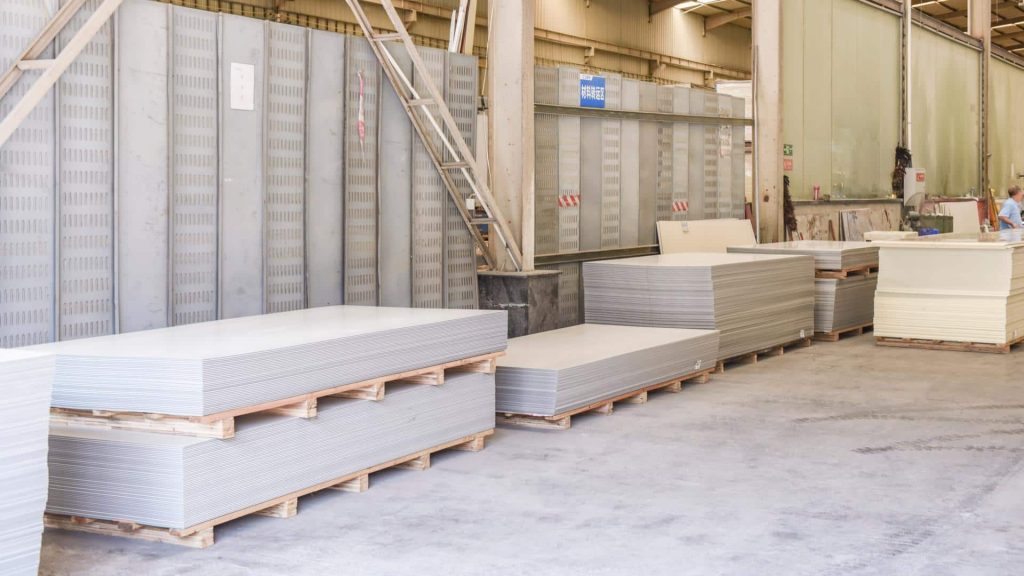
Huigong runs as a factory-direct manufacturer with full process control, more than 14 years of export experience across 50+ countries, multi-stage inspection, OEM/ODM support, fast quoting, and solid technical assistance. Standard lead times are about 15 days, and packaging is designed for international shipping. Samples and project-specific engineering support are available when you need them.
Frequently Asked Questions
Can panels be fully customized?
Yes—thickness, size, cell size, face gauge, finish, and private labeling are all supported within practical engineering limits.
How do they perform on fire safety?
Properly made aluminum honeycomb panels routinely achieve Class A non-combustible ratings.
How much lighter are they compared with solid aluminum?
For comparable stiffness, honeycomb panels are typically 60–80 % lighter.
Conclusion
Aluminum honeycomb panels bring together extreme lightness, high rigidity, excellent flatness, Class A fire performance, and real design flexibility in one engineered product. When you get the thickness, face-sheet gauge, cell size, finish, and single- versus double-sided choice right, they outperform many conventional options in elevators, commercial interiors, partitions, and demanding cladding jobs. Understanding the differences versus ACP and following a clear selection process helps the material deliver both technical performance and long-term value. For project-specific advice, samples, or quotes, talk to a capable factory-direct manufacturer early in the design stage.