

SPC Flooring vs. Other Flooring Types: Key Differences and Applications
SPC flooring is a rigid-core vinyl flooring option made primarily from stone powder and polyvinyl chloride (PVC). Its dense core provides dimensional stability, moisture resistance, and a firm surface, making it a practical choice for many residential and commercial projects.
However, SPC is not the only flooring material available. PVC flooring, LVT, WPC, laminate, and hardwood each have different structural characteristics, performance levels, and installation requirements.
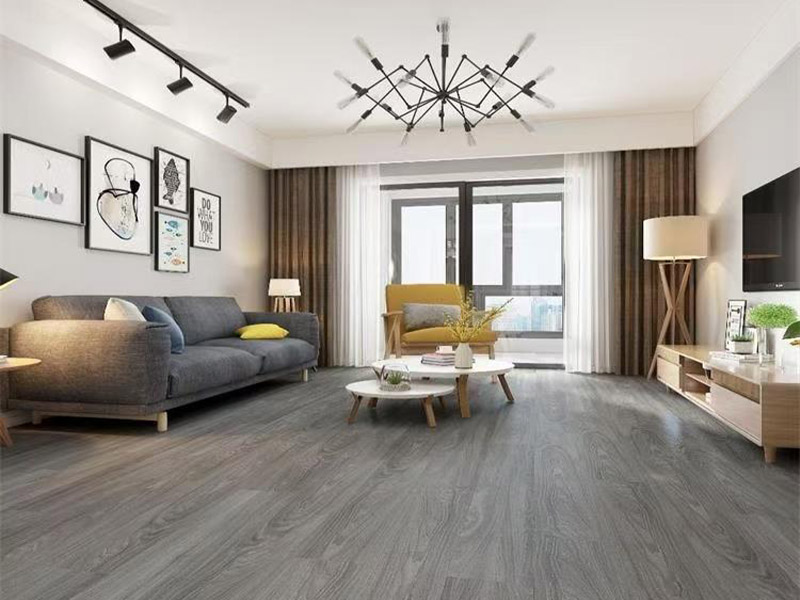
Understanding these differences helps project owners, contractors, and flooring distributors select materials based on actual usage conditions rather than appearance alone. This guide compares SPC flooring with other common flooring types, covering material composition, durability, water resistance, comfort, installation, and commercial applications.
Table of Contents
Understanding SPC and Other Flooring Materials
SPC belongs to the broader category of vinyl flooring, but its rigid stone-plastic composite core gives it different physical properties from conventional flexible vinyl products. Other flooring materials, including laminate and hardwood, use different core structures and manufacturing processes, which directly influence their performance.
Before comparing them, it is important to understand how these flooring categories are related and what distinguishes each one.
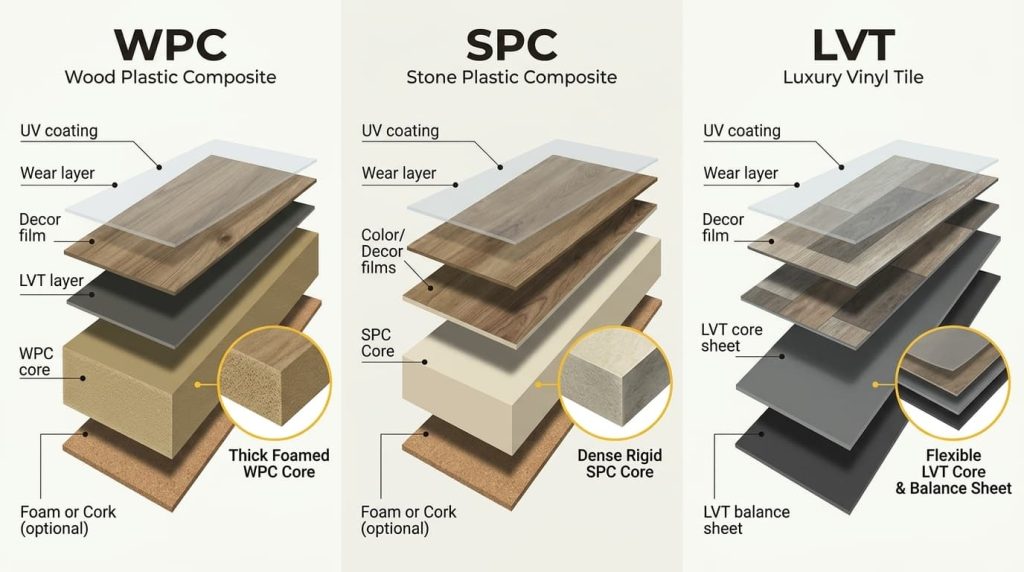
- PVC Flooring: PVC flooring is a broad category of flooring products made with polyvinyl chloride. It includes different constructions, such as vinyl rolls, vinyl tiles, and other flexible flooring products. PVC flooring is available in various thicknesses and installation formats, depending on the product.
- LVT (Luxury Vinyl Tile): LVT is a type of vinyl flooring manufactured in tile or plank formats. It generally has a more flexible construction than SPC and is available in different thicknesses, textures, and installation systems. Some LVT products use adhesive installation, while others feature click-lock or loose-lay systems.
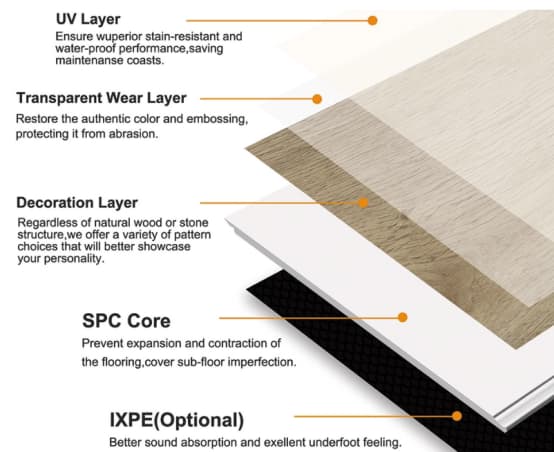
- SPC (Stone Plastic Composite) Flooring: SPC flooring features a rigid composite core made primarily from stone powder, commonly calcium carbonate, and PVC resin. The dense core provides a firm structure and good dimensional stability. Many SPC products use a click-lock floating installation system and include a wear layer, decorative film, rigid core, and optional attached underlayment.
- WPC (Wood Plastic Composite) Flooring: WPC flooring uses a wood-plastic composite core, generally incorporating wood-based materials and polymer components. Compared with SPC, WPC products typically have a lighter and less rigid core, often providing a softer feel underfoot. Their dimensional stability and resistance to indentation depend on the specific formulation and construction.
- Laminate Flooring: Laminate flooring generally consists of a protective surface layer, decorative layer, high-density fiberboard (HDF) core, and balancing layer. It offers a wide range of wood and stone-inspired designs, but its moisture resistance depends heavily on the core material, edge treatment, and product construction.
- Hardwood Flooring: Hardwood flooring is made from natural wood, while engineered wood flooring combines a real wood surface layer with a multi-layer structural base. Solid and engineered hardwood products offer natural textures and a warmer underfoot feel, but they require appropriate moisture management and installation conditions.
One important distinction is that SPC, PVC, and LVT are not entirely separate material categories. SPC is a specific type of rigid-core vinyl flooring, while LVT describes a vinyl flooring product category that can have different core constructions. Therefore, comparisons should focus on the actual product structure rather than relying on product names alone.
SPC Flooring vs. Other Flooring Types: Key Differences
Although these flooring materials may have similar decorative appearances, their internal structures create significant differences in performance and installation.
The following comparison highlights the main characteristics of each flooring type.
| Comparison | SPC Flooring | Flexible PVC / LVT | Laminate Flooring | Hardwood Flooring |
| Core Structure | Rigid stone-plastic composite | Flexible vinyl construction | HDF or wood-based core | Natural or engineered wood |
| Water Resistance | Generally high | Generally high, depending on construction | Varies by product | Sensitive to moisture |
| Structural Stability | Rigid core with good dimensional stability | More flexible | Depends on core and installation | Sensitive to environmental changes |
| Underfoot Feel | Firm and relatively hard | Generally more flexible | Firm | Natural and warmer |
| Installation | Often click-lock floating | Glue-down, click-lock, or loose-lay | Usually click-lock floating | Nail-down, glue-down, or floating, depending on product |
| Maintenance | Relatively easy | Relatively easy | Requires moisture precautions | Requires more careful maintenance |
| Refinishing | Generally not refinished | Generally not refinished | Generally not refinished | Some products can be refinished |
For buyers comparing these materials, product thickness alone is not enough to determine quality. Core density, wear-layer thickness, locking-system design, and product test results should also be considered.
SPC vs. PVC Flooring
The main difference between SPC and conventional PVC flooring lies in their core construction.
Traditional flexible PVC flooring uses a more flexible vinyl-based structure, while SPC incorporates a rigid composite core containing stone powder and PVC resin. This makes SPC denser and more rigid than many conventional flexible PVC products.
In practical applications, the differences include:
- Structural rigidity: SPC maintains a firmer structure under load, while flexible PVC products can adapt more easily to slight surface contours.
- Dimensional stability: The rigid SPC core provides good dimensional stability under normal indoor conditions. However, expansion gaps and installation requirements still need to be followed.
- Installation: Many SPC products use click-lock systems, while conventional PVC flooring may require adhesive installation. Actual installation methods depend on the product.
- Application: SPC is often selected for projects requiring a rigid floating floor with moisture-resistant performance, while flexible PVC products can be suitable for applications where flexibility or specific adhesive installation systems are preferred.
For buyers comparing these materials, product thickness alone is not enough to determine quality. Core density, wear-layer thickness, locking-system design, and product test results should also be considered.
SPC vs. LVP Flooring
LVP, or Luxury Vinyl Plank, refers to vinyl flooring manufactured in plank formats. It is a product category rather than a single core construction. Some LVP products are flexible, while others use rigid-core technology, including SPC.
When comparing conventional flexible LVP with SPC, the most noticeable differences are rigidity and installation characteristics.
- Flexibility: Flexible LVP can bend more easily, while SPC has a much more rigid core.
- Resistance to indentation: SPC’s dense core generally provides better resistance to indentation from concentrated loads than many flexible vinyl products. However, performance still depends on product construction and load conditions.
- Installation: SPC commonly uses click-lock floating installation. Flexible LVP may use adhesive, click-lock, or other installation systems.
- Subfloor requirements: Both materials require suitable subfloor preparation. SPC is particularly sensitive to unevenness because its rigid structure cannot easily follow surface irregularities.
The distinction between SPC and LVP should therefore be made by checking the product’s core construction, not simply by looking at whether it is sold as vinyl plank flooring.
SPC Flooring vs. Laminate Flooring
SPC and laminate flooring can both reproduce the appearance of wood, stone, and other decorative surfaces. However, their core materials are fundamentally different.
SPC uses a stone-plastic composite core, while conventional laminate flooring generally uses an HDF core made from compressed wood fibers.
Their main differences include:
- Water resistance: SPC generally offers stronger resistance to water exposure because its core does not rely on wood fibers. Conventional laminate can swell when moisture penetrates its core, although some modern laminate products offer enhanced moisture protection.
- Surface durability: Both materials can offer good wear performance. SPC performance depends on its wear-layer thickness and surface treatment, while laminate commonly uses a rated wear-resistant overlay.
- Underfoot feel: SPC usually feels firm and rigid. Laminate can also feel firm, with the final experience influenced by its underlayment and installation quality.
- Maintenance: SPC is generally easier to maintain in areas where occasional water exposure is expected. Laminate requires more attention to standing water and moisture around joints.
- Installation: Both commonly use click-lock floating systems, although their locking profiles and installation requirements vary.
For projects involving kitchens, bathrooms, utility areas, or spaces where moisture exposure is a concern, SPC is often a more practical option than conventional laminate. For dry interior spaces where decorative wood patterns and a familiar laminate flooring feel are priorities, laminate may also be worth considering.
SPC Flooring vs. Hardwood Flooring
SPC and hardwood flooring serve different design and performance priorities.
Hardwood provides natural wood grain, texture, and warmth. SPC offers a more consistent manufactured surface and generally better resistance to everyday moisture exposure.
The main differences include:
- Appearance: Hardwood features natural variations in grain and color. SPC uses decorative films to reproduce wood, stone, or other surface designs with more consistent patterns.
- Moisture resistance: SPC is generally more suitable for areas exposed to occasional moisture. Natural hardwood can expand, contract, or become damaged when exposed to excessive moisture.
- Underfoot comfort: Hardwood typically provides a warmer and more natural feel, while SPC has a firmer surface. An attached IXPE or EVA underlayment may improve the acoustic and cushioning properties of SPC.
- Maintenance: Hardwood may require periodic refinishing or protective treatments. SPC generally requires less specialized maintenance.
- Repair and refinishing: Some solid and engineered hardwood products can be sanded and refinished, depending on their construction and surface thickness. SPC flooring is generally not designed for refinishing, although individual planks may be replaceable if the installation system allows it.
For projects where natural materials, premium appearance, and long-term refinishing potential are priorities, hardwood may be more appropriate. SPC is often a more practical alternative for moisture-prone spaces, renovation projects, and commercial environments where maintenance efficiency is important.
Flooring Performance Comparison: Which Performs Better?
Comparing flooring materials by their core structure provides a starting point, but actual performance depends on product specifications, manufacturing quality, installation conditions, and daily use.
The following factors are particularly important when selecting flooring for residential and commercial projects.
Water Resistance and Moisture Protection
Water resistance is one of the main reasons buyers consider SPC flooring.
Its rigid composite core does not absorb moisture in the same way as conventional wood-based flooring cores. This makes SPC suitable for many areas where occasional water exposure is expected, including kitchens, bathrooms, and other moisture-prone indoor spaces, provided the product is approved for those applications.
Flexible PVC and many LVT products also offer strong water resistance. The main differences often relate to the product’s backing, joints, installation system, and substrate requirements.
Conventional laminate and hardwood require more careful moisture management. Water entering joints or exposed edges may cause swelling, deformation, or other damage.
Practical recommendation: For projects where moisture resistance is a priority, compare the manufacturer’s water-resistance test results and installation instructions. A water-resistant flooring surface does not automatically make the entire floor system waterproof, especially at joints, edges, and perimeter connections.
Wear Resistance and Scratch Performance
Wear resistance is important in areas with frequent foot traffic, moving furniture, or commercial equipment.
SPC flooring commonly uses a transparent wear layer above its decorative film. Typical specifications may include 0.3 mm and 0.5 mm wear layers, although other options are available.
A thicker wear layer can provide additional protection against surface wear, but it should not be treated as the only indicator of product quality. Surface coatings, abrasion-test results, and the quality of the locking system also matter.
Laminate flooring often uses an abrasion-resistant overlay and may be classified using AC ratings. Hardwood has a natural wood surface that can be scratched or dented, but some products can be refinished.
Practical recommendation: For commercial projects, evaluate the expected foot traffic and maintenance frequency before selecting a wear-layer specification. Do not assume that every SPC product with a particular wear-layer thickness automatically meets a specific commercial performance requirement.
Impact Resistance and Dimensional Stability
SPC’s rigid core helps maintain the shape of the flooring under normal indoor conditions. Its dense construction can also provide good resistance to indentation from concentrated loads.
However, rigidity does not mean that SPC is immune to impact damage. Heavy objects, sharp impacts, and uneven subfloors can still cause problems.
WPC generally offers a softer construction and a different underfoot response. Flexible vinyl can accommodate slight bending more easily, while laminate and wood-based products respond differently depending on their core density and construction.
Dimensional stability is also affected by temperature, direct sunlight, installation gaps, room size, and substrate conditions.
Practical recommendation: For large commercial installations, check the product’s dimensional stability test results, recommended expansion gaps, and installation limitations. These factors are particularly important in spaces with large windows, temperature fluctuations, or extensive continuous flooring areas.
Comfort, Sound Insulation and Underfoot Feel
Flooring comfort is not determined by the surface material alone. Core structure, underlayment, subfloor preparation, and installation quality all influence how a floor feels and sounds.
Hardwood generally provides a warmer and more natural underfoot experience. WPC and some flexible vinyl products may feel softer than SPC, while SPC tends to have a firmer surface.
Many SPC products include an attached IXPE or EVA underlayment. This can help reduce impact noise and improve the overall installation experience, although the actual acoustic performance depends on the underlayment specifications and the building structure.
Practical recommendation: If comfort and sound control are important, evaluate the complete flooring system rather than the core material alone. For hotels, offices, and multi-unit buildings, acoustic test data and underlayment compatibility should be included in the selection process.
Installation and Maintenance Requirements
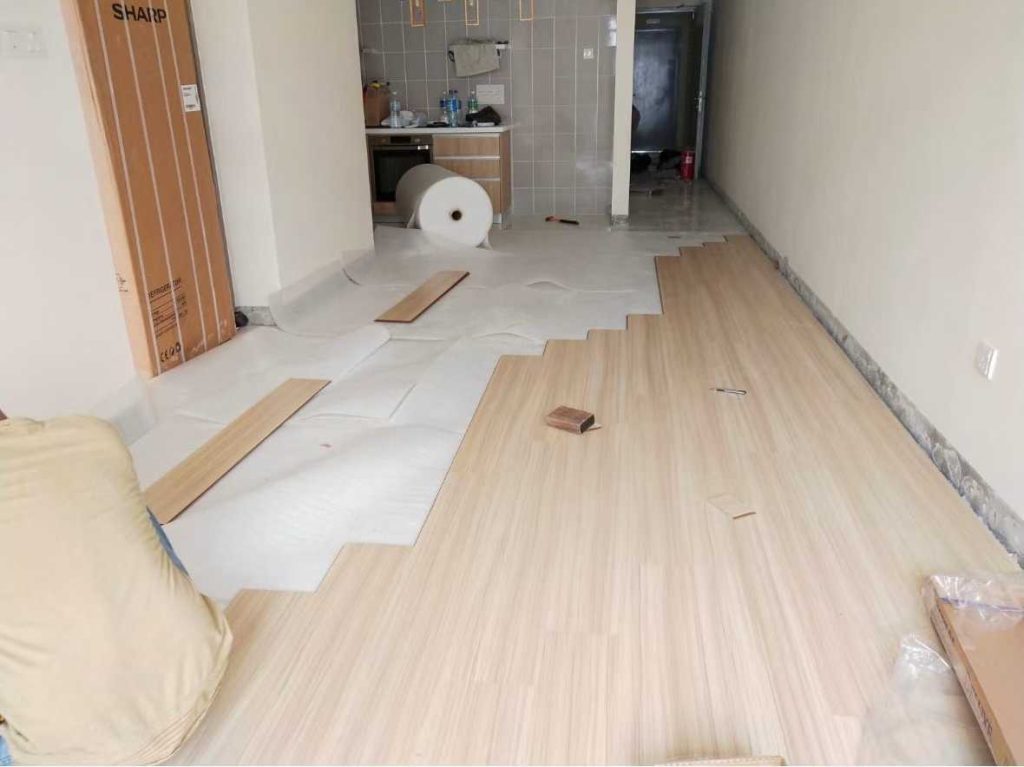
SPC flooring is commonly installed using a click-lock floating system. This can reduce the need for adhesives and make individual plank replacement possible in some installations.
Flexible LVT may use glue-down, click-lock, or loose-lay installation. Laminate also commonly uses floating click-lock systems, while hardwood may require nail-down, glue-down, or floating installation depending on its construction.
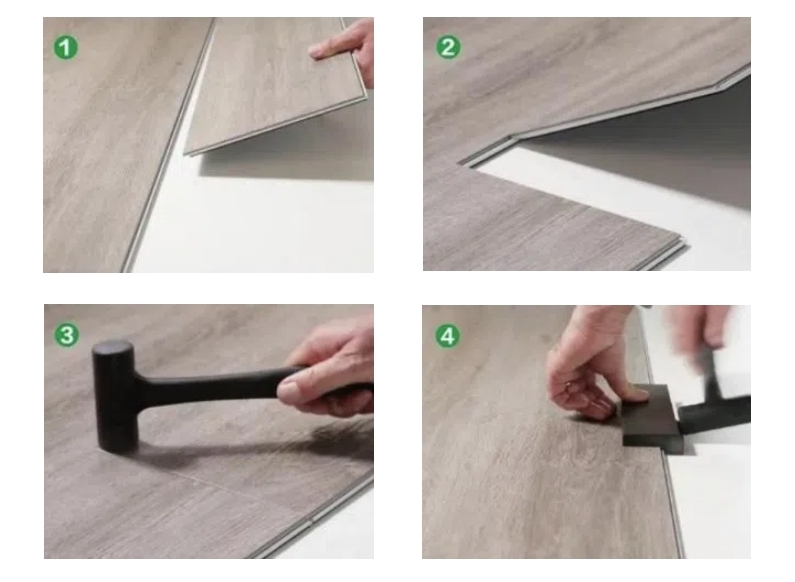
One important consideration is subfloor flatness. Because SPC has a rigid core, it cannot easily follow uneven surfaces. Significant irregularities may cause movement, joint stress, or locking-system damage.
Maintenance requirements also vary. SPC and vinyl products are generally easy to clean, while hardwood and conventional laminate may require more careful moisture management.
Practical recommendation: Before installation, assess subfloor flatness, moisture conditions, expansion requirements, and the manufacturer’s installation guidelines. A suitable installation method is just as important as selecting the right flooring material.
Initial Cost and Long-Term Value
The initial purchase price is only one part of a flooring project’s total cost.
Material thickness, wear-layer specifications, decorative finishes, installation systems, underlayment, labor, and subfloor preparation can all influence the final budget.
SPC may offer a practical balance between moisture resistance, maintenance requirements, and installation efficiency. However, higher-specification SPC products can cost more than basic vinyl or laminate options.
Hardwood may involve higher material and maintenance costs, but its ability to be refinished can extend its service life in suitable conditions.
Practical recommendation: Compare the total installed cost and expected maintenance requirements rather than evaluating products by unit price alone. For large commercial projects, replacement costs, downtime, and long-term maintenance should also be considered.
Which Flooring Type Is Best for Different Applications?
The right flooring material depends on how the space will be used, the level of foot traffic, moisture exposure, design requirements, and maintenance expectations.
There is no single flooring type that is ideal for every project.
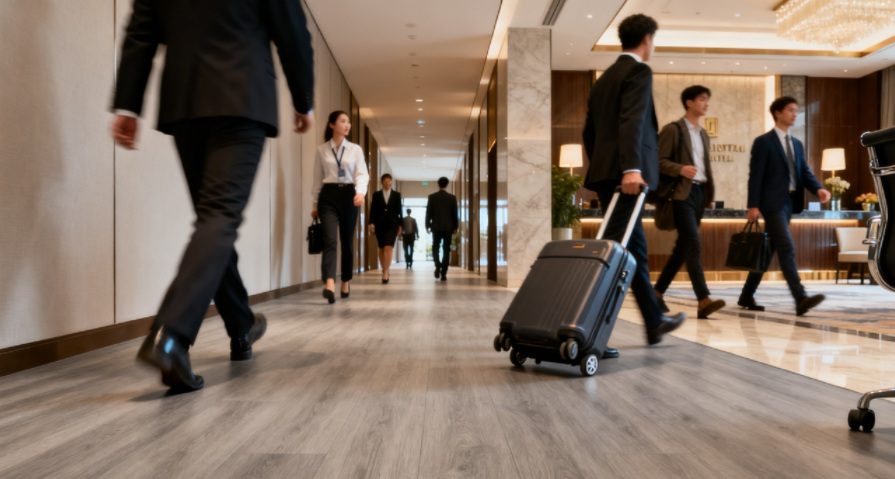
Hotels and Hospitality Spaces
Hotels require flooring that balances appearance, durability, maintenance, and guest comfort.
SPC can be considered for guest rooms, corridors, and selected common areas where moisture resistance and easy maintenance are important. However, acoustic performance and underfoot comfort should also be evaluated, particularly in multi-story buildings.
Hardwood and engineered wood may be preferred in premium interiors where natural material appearance is a major design priority.
Retail Stores and Shopping Centers
Retail environments often experience frequent foot traffic, furniture movement, and repeated cleaning.
SPC flooring can be a practical option for selected retail areas because of its rigid construction and relatively simple maintenance. The appropriate wear-layer specification should be selected according to expected traffic levels.
For large shopping centers and high-traffic commercial spaces, buyers should also evaluate abrasion performance, impact resistance, slip resistance, and the flooring manufacturer’s commercial-use recommendations.
Offices and Commercial Buildings
Office environments typically require a balance between appearance, comfort, acoustic performance, and maintenance.
SPC offers a range of decorative designs and can be installed with compatible underlayment systems. It may be suitable for offices, meeting rooms, and other interior areas where a rigid, easy-to-maintain floor is preferred.
However, acoustic requirements, rolling-chair loads, and furniture movement should be considered before choosing a product.
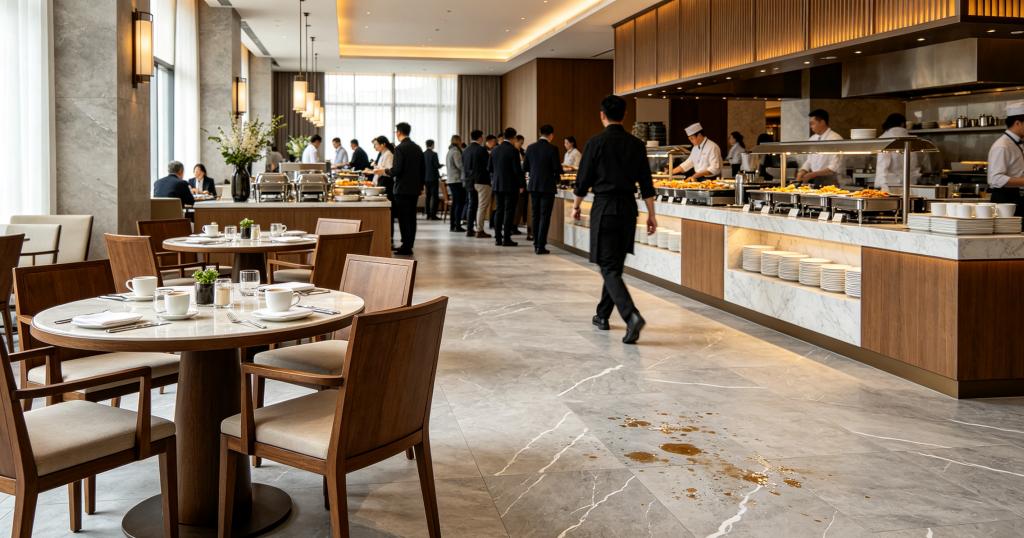
Restaurants and High-Traffic Areas
Restaurants and similar commercial spaces may experience frequent cleaning, spills, and heavy daily use.
SPC’s moisture-resistant core can make it a suitable option for selected indoor areas, but the complete flooring system must meet the project’s requirements for surface slip resistance, cleaning chemicals, and installation conditions.
Areas with frequent standing water, grease, or intensive commercial kitchen operations may require specialized flooring systems rather than standard decorative SPC planks.
Residential and Mixed-Use Projects
For residential renovations and mixed-use developments, SPC can provide a practical combination of decorative flexibility, moisture resistance, and relatively straightforward maintenance.
It is commonly considered for living rooms, bedrooms, kitchens, and selected renovation applications.
For areas where natural wood appearance and a warmer underfoot feel are more important, engineered hardwood or other wood-based flooring may be a better fit.
How to Choose the Right Flooring for Your Project
Selecting flooring for a commercial or residential project requires more than comparing product appearance and thickness. Buyers should consider the complete usage environment and technical specifications.
Consider Foot Traffic and Usage Frequency
Start by identifying how frequently the floor will be used and what types of loads it will experience.
A private office, hotel corridor, retail store, and public commercial building have very different traffic conditions. These differences influence the required wear resistance, core construction, and maintenance schedule.
Evaluate Moisture and Maintenance Requirements
Consider whether the floor will be exposed to spills, frequent cleaning, humidity changes, or occasional standing water.
SPC and many vinyl products are suitable for moisture-prone indoor environments, while conventional laminate and hardwood require more careful protection.
Also consider whether the maintenance team can follow the cleaning and care requirements of the selected material.
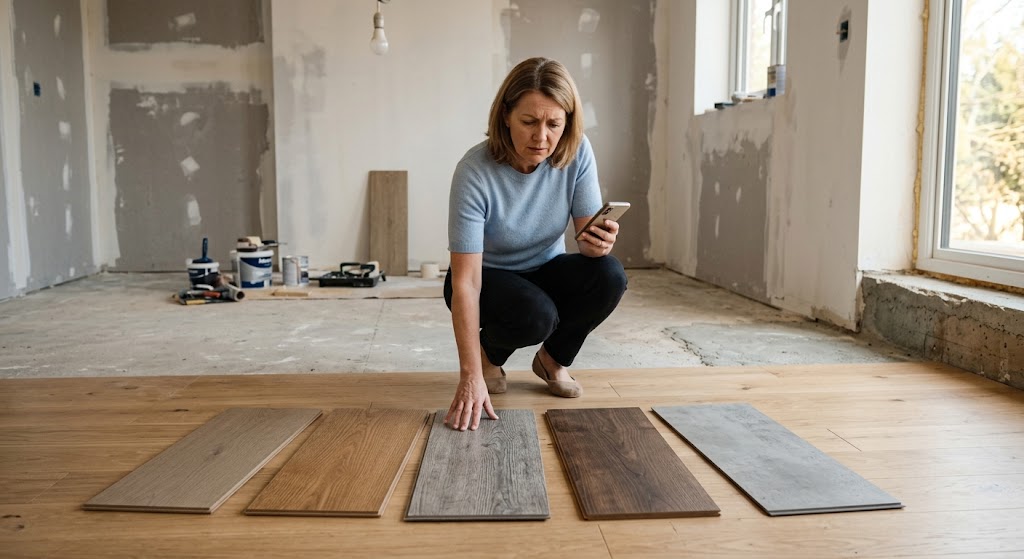
Compare Product Specifications and Wear Layers
Product specifications should be reviewed before making a purchasing decision.
For SPC flooring, important details include:
- Overall product thickness
- Wear-layer thickness
- Core composition and density
- Surface coating and decorative finish
- Locking-system design
- Attached underlayment specifications
- Relevant product test reports and certifications
These details provide a more reliable basis for comparison than product names or general marketing descriptions.
Consider Installation Methods and Total Project Cost
Installation requirements can influence labor costs, project schedules, and long-term performance.
Check whether the product supports click-lock floating installation, glue-down installation, or another approved method. Subfloor preparation, expansion gaps, and underlayment compatibility should also be included in the project plan.
For distributors and contractors purchasing in bulk, consistent product specifications and stable supply capacity are additional factors worth evaluating.
Why Consider SPC Flooring for Commercial Projects?
SPC flooring has become an important option in residential renovation and commercial interior projects because it combines a rigid core with decorative flexibility and relatively straightforward maintenance.
Its suitability depends on the specific product specification, but several characteristics make it worth considering.
Rigid Core Construction for Dimensional Stability
The stone-plastic composite core gives SPC flooring a firm and dense structure. Compared with many flexible vinyl products, this construction provides greater rigidity and helps maintain the shape of the planks under normal indoor conditions.
This characteristic can be useful in commercial interiors where a stable floating floor system is preferred.
Water Resistance and Easy Maintenance
SPC’s composite core offers strong resistance to moisture compared with conventional wood-based flooring cores.
Its surface is generally easy to clean using suitable flooring care products. This makes it a practical choice for many indoor environments where routine cleaning and maintenance efficiency are important.
Multiple Surface Designs and Installation Options
SPC flooring is available in a variety of wood-grain, stone-inspired, and other decorative finishes.
Many products feature click-lock systems, while specifications such as thickness, wear layer, surface texture, and attached underlayment may vary according to the product range.
These options allow distributors, contractors, and project buyers to select products according to different design and installation requirements.
Customizable Specifications for Different Projects
For commercial flooring projects, product specifications may need to be adjusted according to traffic conditions, design preferences, and installation requirements.
Depending on manufacturing capabilities, customization options may include product dimensions, wear-layer thickness, surface finishes, core construction, and packaging.
Buyers should confirm available specifications, testing requirements, and production capabilities with the manufacturer before placing bulk orders.
Frequently Asked Questions About SPC Flooring
Is SPC Flooring Better Than PVC Flooring?
SPC is a rigid-core type of vinyl flooring, while PVC flooring is a broader category that includes different flexible and rigid constructions. SPC generally offers a firmer core and good dimensional stability, while flexible PVC products may provide greater flexibility. The better choice depends on the installation method and project requirements.
Is SPC Flooring Better Than LVP?
SPC and LVP are not always directly comparable because LVP describes a vinyl plank product category, while SPC identifies a particular rigid-core construction. Compared with conventional flexible LVP, SPC generally has a denser and more rigid core. Buyers should check the actual core structure and specifications before comparing products.
Is SPC Flooring Better Than Laminate?
SPC generally provides better resistance to moisture than conventional laminate with a wood-based core. Laminate may offer different surface wear ratings and decorative options. For moisture-prone areas, SPC is often a more practical choice, while laminate can be suitable for dry indoor spaces.
What Are the Main Disadvantages of SPC Flooring?
SPC flooring can feel harder and less warm underfoot than hardwood or some WPC products. Its rigid core also requires a properly prepared, sufficiently flat subfloor. In addition, SPC is generally not designed for refinishing. Buyers should consider these limitations alongside its moisture resistance and maintenance advantages.
Explore Our SPC Flooring Products
Choosing the right SPC flooring involves balancing core construction, wear resistance, surface design, installation requirements, and project conditions.
For distributors, contractors, and commercial project buyers, comparing complete product specifications is essential to achieving consistent flooring performance.
Explore our SPC flooring range to review available designs, product structures, and specifications for different interior applications. Contact our team to discuss product requirements, bulk supply, and customization options for your next flooring project.