

Types of Indoor Composite Flooring: WPC, SPC and More
Choosing indoor flooring is not simply a matter of selecting a color or surface pattern. The structure and materials used inside the flooring can affect its durability, moisture resistance, comfort, stability and suitability for different environments.
Indoor composite flooring includes several flooring types made from two or more materials or constructed with multiple engineered layers. Among the most common options are WPC flooring, SPC flooring and engineered wood flooring. While these products may offer similar decorative effects, their core structures and performance characteristics are quite different.
This guide explains the main types of indoor composite flooring, how they differ and how to choose the right option for residential, hospitality and commercial projects.
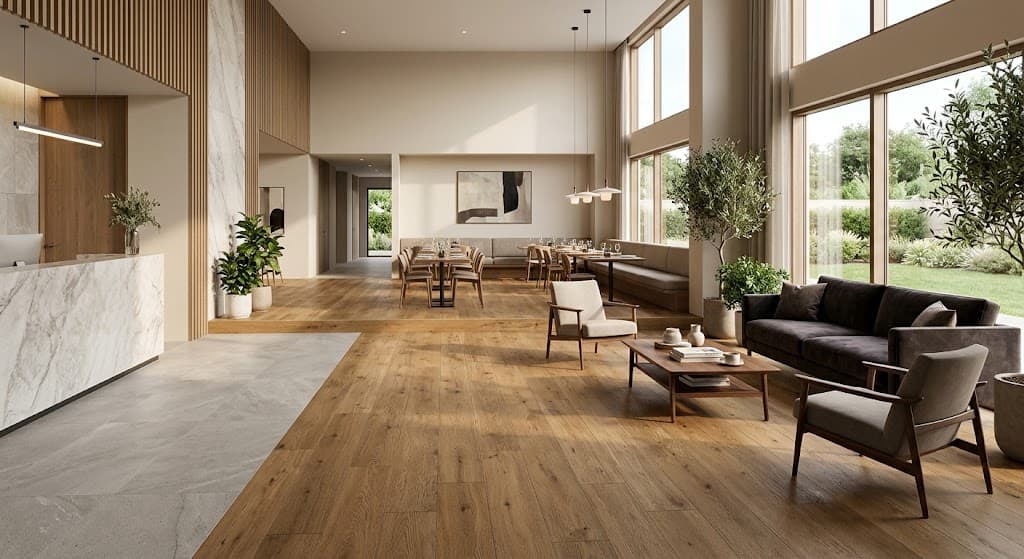
What Is Indoor Composite Flooring?
Indoor composite flooring is a broad term for flooring made by combining different materials or engineered layers rather than using a single solid material throughout.
Depending on the product type, the flooring may combine:
- Wood fibers and polymers
- Mineral materials and polymers
- Real wood veneers and engineered wood layers
Different build setups give different results. A few composite floors are made to hold up better against moisture and to stay steady in size. Other options put more weight on comfort under your feet or on how real wood looks.
For most indoor projects, the main types of composite flooring include WPC flooring, SPC flooring and engineered wood flooring.
Main Types of Indoor Composite Flooring
WPC Flooring
WPC stands for Wood Plastic Composite. Its core is generally made by combining wood-based materials, polymers and other additives to create an engineered composite structure.
WPC flooring usually feels softer than the harder floor types. When you walk on it, it is often more comfortable underfoot. The core in the material also helps it stay in shape over time. It can resist moisture too. Because of that, it works well in many kinds of indoor rooms.
WPC flooring is available in different decorative designs, including wood-look and other interior finishes. Depending on the product construction, it can be used in residential interiors as well as hospitality and commercial spaces.
Common applications include living areas, bedrooms, hotel rooms, offices and other indoor spaces where comfort and appearance are important.
WPC flooring can be a practical choice when a project requires a balance between durability, moisture performance and a more comfortable walking experience.
SPC Flooring
SPC stands for Stone Plastic Composite. It is typically manufactured with a rigid core containing mineral materials, such as limestone, combined with PVC and stabilizing components.
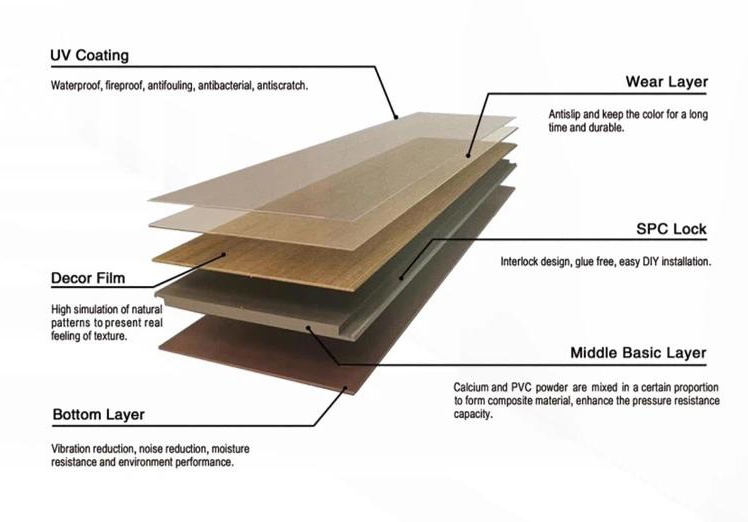
The main characteristic of SPC flooring is its rigid core construction. This structure provides high dimensional stability and makes SPC a popular option for indoor projects where durability and moisture resistance are important.
SPC flooring is commonly selected for its:
- Rigid and stable core
- Waterproof performance
- Good resistance to daily wear and impact
- Easy maintenance
- Wide range of decorative surface designs
- Click-lock installation options
- Suitability for high-traffic interiors
SPC flooring shows up a lot in hotels, apartments, office spaces, retail shops, restaurants, and other public areas.
If a place gets heavy foot traffic or needs easier upkeep, SPC flooring can still work well. It gives a tough surface and is also quicker to fit.
Engineered Wood Flooring
Engineered wood flooring is another important type of indoor composite flooring. Unlike SPC and WPC, which use composite polymer-based cores, engineered wood flooring is constructed primarily from multiple wood-based layers.
A typical structure includes a real wood veneer surface combined with an engineered wood core and supporting backing layers.
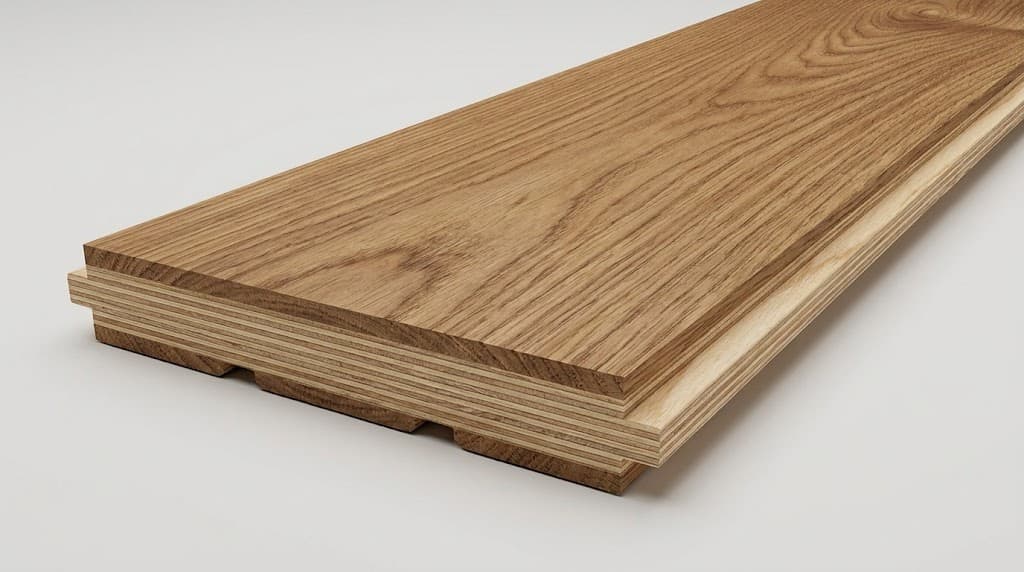
This construction allows the flooring to retain the natural appearance and texture of real wood while providing greater structural stability than traditional solid hardwood in many indoor environments.
Key characteristics of engineered wood flooring include:
- Real wood surface
- Natural grain and appearance
- Multi-layer construction
- Improved dimensional stability compared with solid wood
- A wide choice of wood species and finishes
Engineered wood flooring is commonly used in residential interiors, hotels, offices and high-end interior design projects where the authentic appearance of natural wood is a major requirement.
However, its moisture resistance, maintenance needs and long-term performance can vary depending on the specific construction and surface finish.
WPC vs SPC vs Engineered Wood Flooring
Although WPC, SPC and engineered wood flooring can all be used indoors, they are built differently and designed to meet different project requirements.
| Feature | WPC Flooring | SPC Flooring | Engineered Wood Flooring |
| Main Structure | Wood-based material + polymer | Mineral-based material + PVC | Multiple wood-based layers |
| Core Feel | Relatively softer | Firmer and more rigid | Natural wood feel |
| Water Resistance | High, depending on construction | Excellent | Depends on product construction |
| Dimensional Stability | High | Very high | High |
| Underfoot Comfort | Good | Firmer feel | Natural and comfortable |
| Surface Appearance | Decorative wood or stone designs | Decorative wood or stone designs | Real wood veneer |
| Maintenance | Easy | Easy | May require more care |
| Commercial Use | Suitable for many projects | Well suited to demanding projects | Suitable for selected projects |
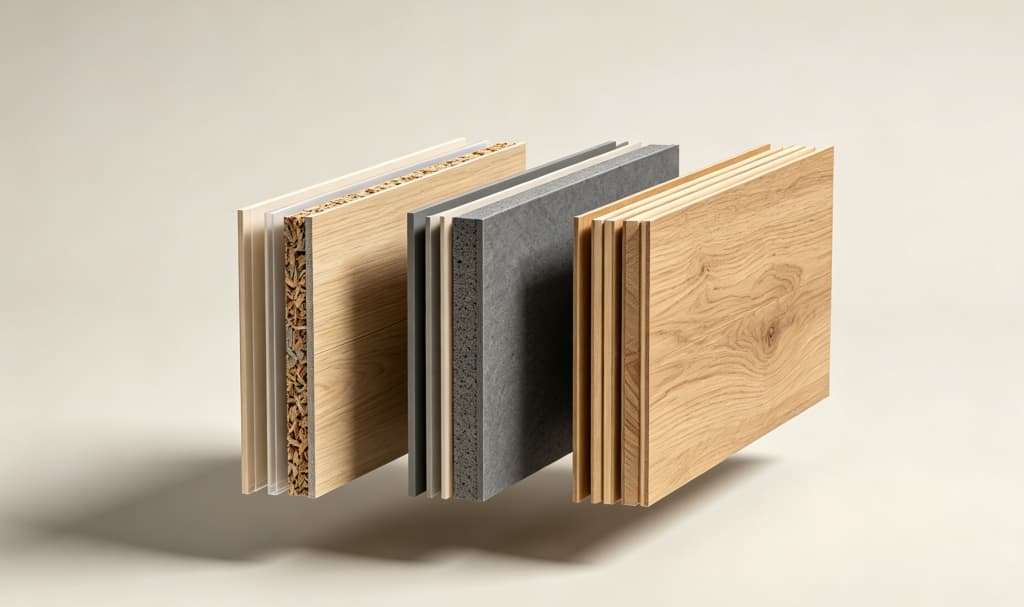
There is no single flooring type that is best for every situation.
A traffic-heavy project needs tough, water-safe materials, so the specs can be very different from a hotel room. In a hotel, people notice how it feels to walk and what the space feels like. If the goal is a premium look with real natural wood, engineered wood flooring often fits better.
The right choice depends on the specific application rather than simply choosing the most rigid or most expensive material.
How to Choose the Right Indoor Composite Flooring
When comparing different types of indoor composite flooring, it is important to evaluate how and where the flooring will be used.
Consider Moisture Exposure
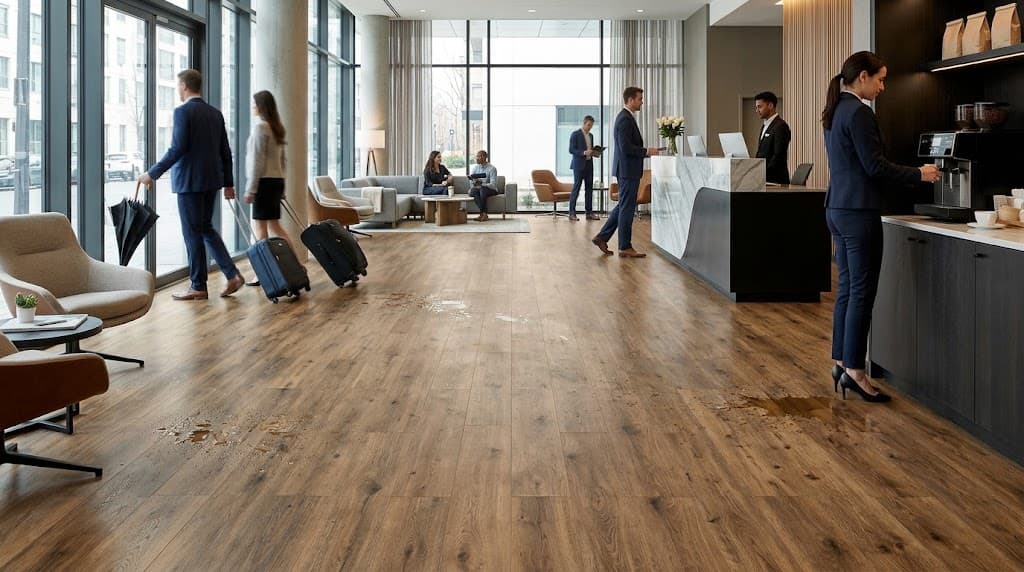
Moisture is an important consideration for kitchens, entryways, hospitality spaces and other environments where floors may be exposed to spills or regular cleaning.
SPC flooring is often selected for projects requiring strong waterproof performance and dimensional stability. WPC flooring can also offer good moisture resistance depending on its construction.
Engineered wood flooring may require more careful consideration in environments with significant moisture exposure.
Before selecting a flooring product, it is important to consider the actual installation environment rather than relying only on a general waterproof claim.
Consider Foot Traffic
Traffic levels can directly affect flooring selection.
For relatively low-traffic residential spaces, comfort and appearance may be the main priorities. In busy hotels, retail stores, offices and commercial interiors, wear resistance, impact performance and maintenance may become more important.
SPC flooring is often considered for high-traffic indoor projects because its rigid core provides strong dimensional stability and durability.
The expected use of the space should therefore be considered before selecting the flooring structure.
Consider Underfoot Comfort
Different core constructions can create noticeably different walking experiences.
WPC flooring generally offers a relatively softer feel than rigid SPC flooring. This can make it attractive for spaces where walking comfort is an important part of the user experience.
SPC flooring provides a firmer and more solid feel underfoot, while engineered wood flooring offers the natural feel associated with a real wood surface.
For hotels, residential interiors and hospitality environments, comfort may deserve greater consideration. For high-traffic commercial projects, durability and stability may take priority.
Consider Appearance and Design Requirements
Surface appearance is another major factor.
SPC and WPC flooring are available in a wide variety of decorative designs, including wood-look and stone-look surfaces. This makes them suitable for projects requiring consistent colors, patterns and large-scale design coordination.
Engineered wood flooring is different because it uses a real wood surface. Each board can provide more natural grain variation and visual character.
The choice depends on whether the project prioritizes a highly controlled decorative design or the authentic appearance of natural wood.
Consider Installation Requirements
Installation can affect project costs and construction schedules.
Indoor composite flooring may use different installation systems, including:
- Click-lock systems
- Glue-down installation
- Other project-specific installation methods
For commercial and large-scale projects, installation speed and subfloor requirements can be important purchasing factors.
Before ordering, buyers should confirm the installation method, product dimensions, subfloor conditions and any additional accessories required for the project.
Indoor Composite Flooring for Different Applications
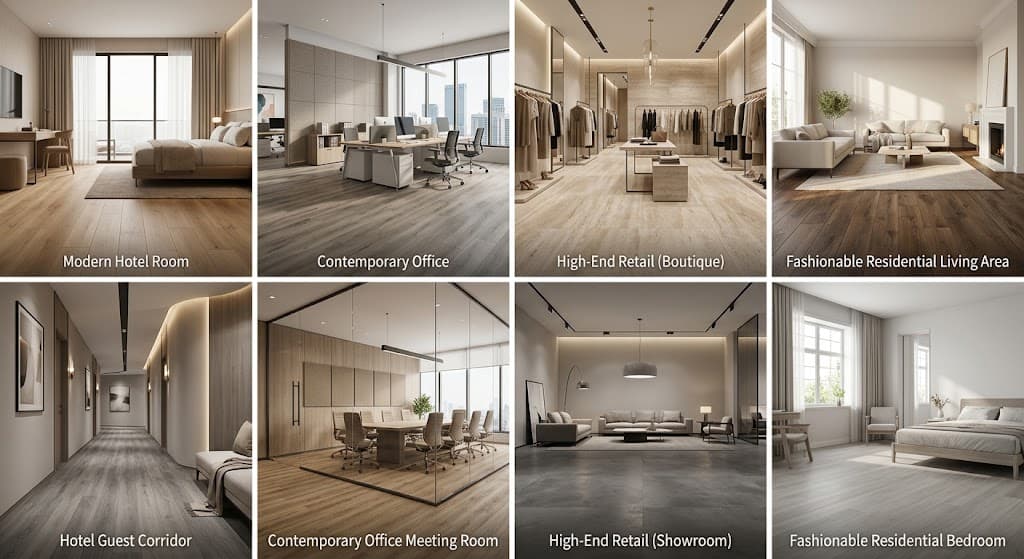
Hotels and Hospitality
Hotels require flooring that balances appearance, durability, maintenance and guest comfort.
SPC flooring can be suitable for public areas and other locations requiring easy maintenance and durability. WPC flooring may be considered where a more comfortable underfoot feel is preferred.
Engineered wood flooring can also be used in premium hospitality interiors where natural wood appearance is part of the design concept.
Offices
Office flooring needs to perform well under daily foot traffic while maintaining a professional appearance.
SPC flooring can be a practical option for offices because of its rigid structure, easy maintenance and durability. WPC flooring may also be suitable for offices where comfort and acoustic considerations are important.
Retail and Commercial Spaces
Retail environments often experience frequent foot traffic and require flooring that is easy to maintain.
For these applications, SPC flooring is commonly considered because of its dimensional stability, rigid construction and ability to support demanding indoor use.
Surface design is also important, particularly for stores where flooring contributes to the overall customer experience and interior branding.
Residential Interiors
Residential projects offer more flexibility because requirements can vary from room to room.
WPC flooring can be selected for comfort-focused living spaces. SPC flooring may be preferred for areas requiring strong moisture resistance and easy maintenance. Engineered wood flooring is suitable for projects where the appearance and texture of real wood are a priority.
Indoor Composite Flooring vs Traditional Flooring
Composite flooring is often compared with traditional materials because each option offers a different balance of performance and appearance.
Composite Flooring vs Solid Hardwood
Solid hardwood provides an authentic natural material throughout the board. However, wood can require more maintenance and may respond to changes in moisture and environmental conditions.
SPC and WPC floors are made with layered construction. That design helps them resist moisture better and stay stable in size. Engineered wood flooring works in a different way. It gives you a real wood top layer. Under that, it uses several layers to support the board and limit movement.
Composite Flooring vs Laminate Flooring
Laminate flooring also uses a multi-layer structure, but its core construction and moisture performance can differ significantly from SPC or WPC flooring.
When shoppers compare these products, they should look at the base material first. They should also check how the top layer is built. Water resistance matters too. Next, review the install steps and what tools or prep the job needs. Finally, think about the use case you have in mind. Do not assume that every multi-layer floor will behave the same way.
Composite Flooring vs LVT
LVT and rigid composite flooring may use similar decorative concepts, but their structures can be different.
LVT is generally more flexible, while SPC uses a rigid mineral-polymer core. This can affect dimensional stability, underfoot feel and suitability for different installation environments.
The right choice should be based on project conditions and performance requirements.
What to Look for When Buying Indoor Composite Flooring
For distributors, contractors, developers and commercial buyers, flooring type is only one part of the purchasing decision.
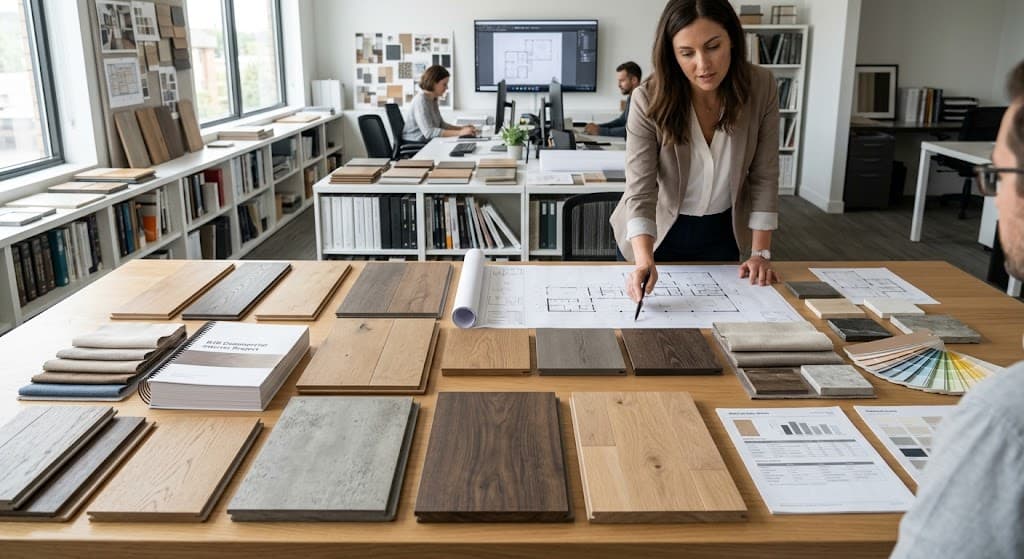
The following factors should also be considered.
- Core construction: Confirm whether the product is WPC, SPC or another engineered flooring structure.
- Thickness: Different projects may require different overall flooring thicknesses.
- Wear layer: This is particularly important for SPC and other resilient flooring products used in high-traffic environments.
- Surface finish: Consider the required wood grain, stone texture, gloss level and overall interior design.
- Installation system: Confirm whether the project requires click-lock, glue-down or another installation method.
- Water resistance: Evaluate the complete product structure and intended application.
- Fire performance: Commercial and public projects may have specific fire-performance requirements.
- Certifications and testing: Relevant certifications and test reports can be important for market access and project approval.
- Customization: B2B buyers may also need custom thicknesses, dimensions, surface designs, packaging or private-label solutions.
Considering these factors early can help buyers select flooring that matches both project performance requirements and supply needs.
Which Type of Indoor Composite Flooring Is Best?
The best type depends on the application.
SPC flooring is often well suited to high-traffic commercial interiors and projects where waterproof performance and dimensional stability are important.
WPC flooring can be a good option for interiors that require a balance of moisture resistance, durability and a relatively more comfortable feel underfoot.
Engineered wood flooring is suitable for projects where an authentic natural wood surface is a primary design requirement.
Rather than asking which type is universally better, buyers should evaluate the flooring according to the installation environment, traffic level, moisture exposure, design requirements, maintenance expectations and installation method.
Conclusion
Indoor composite flooring includes several different engineered flooring options, with WPC, SPC and engineered wood flooring among the most widely used types.
Each uses a different structure to achieve a particular combination of durability, comfort, stability, moisture resistance and appearance. SPC offers a rigid and highly stable structure for demanding indoor applications, WPC provides a more comfortable composite flooring option, while engineered wood combines multi-layer construction with the authentic appearance of real wood.
Understanding these differences can help homeowners, designers, contractors and commercial buyers choose a flooring solution that matches the specific requirements of their project. For indoor commercial applications where durability, waterproof performance and efficient installation are priorities, SPC and WPC flooring are two important options to evaluate.