

What Specifications Affect WPC Wall Panels Lifespan?
A well-constructed WPC wall panel may last for more than 20 years; however, that time frame isn’t fixed; it’s a result of the decisions made prior to the panel even reaching the wall. The composition of the base material, panel thickness, surface coating fire rating, moisture rating, and the quality of installation all have a significant influence on the length of time a panel performs. Knowing these aspects prior to ordering will help to avoid paying for specifications that you don’t require or over-specifying an item that requires more security.
Quick Answer: The Factors That Matter Most
Before we get into the details, here’s the quick version:
- Base material ratio – the wood fiber-to-polymer blend determines structural stability
- Panel thickness – thicker panels resist impact and deformation better
- Surface coating – protects against UV fading and surface wear
- Moisture resistance rating – determines suitability for humid environments
- Fire resistance grade – affects safety compliance and long-term suitability for commercial use
- Installation quality – even a high-spec panel underperforms if installed poorly
- Environmental conditions – humidity, sunlight exposure, and cleaning habits all factor in
Each of these is covered below.
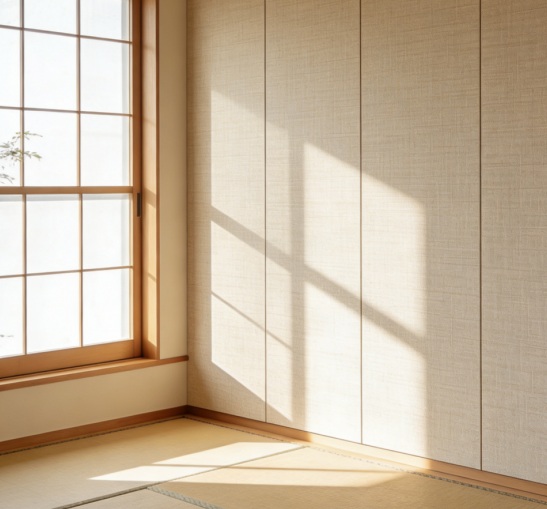
What Specifications Affect WPC Wall Panels Lifespan
Base Material Composition
The WPC (Wood-Plastic Composite) panels are composed of wood fiber thermoplastic polymer (typically PVC) and coupling agents which bind the two materials. The quality and proportion of the components impact the stability of the panel’s dimensions.
A coupling agent of higher quality creates a stronger bond between fibres of wood and the shell. This reduces the tendency of the panel to absorb moisture through tiny gaps. Panels that use lower-grade bonding agents might appear similar on a spec sheet, but will break down faster when exposed to humidity fluctuations in the real world. This is one reason two “WPC panels” from different suppliers, with seemingly similar listed specifications, can age very differently over five to ten years.
Panel Thickness
Thickness is one of the easiest specs to compare, and one of the most misunderstood. WPC wall panels commonly range from 5mm to 18mm, and thicker isn’t automatically “better” — it depends on the application.
- 5–8mm panels work well for low-traffic residential walls, such as bedroom accent walls or living room feature walls, where impact resistance is less critical.
- 11–18mm panels are better suited to commercial or high-traffic environments — hotel corridors, office partitions, retail spaces — where the panel needs to withstand regular contact, furniture movement, or accidental impact.
Choosing a thickness that matches actual usage conditions, rather than defaulting to the thickest option, is usually the more cost-effective decision without sacrificing service life.
Surface Finish and Protective Coating
The finish layer is the first part that is exposed to wear and tear, and is usually the first spot where aging is made apparent — whether through scratches, fading or dulling. Panels that have a properly-cured protection layer resist the effects of UV-driven color fade as well as light scratching much better than panels that have an uneven or thin coating.
This is especially true in rooms with a high amount of sunlight exposure, such as those placed near windows that are large or in rooms facing south where UV degradation increases as time passes.
Moisture and Water Exposure
WPC panels are water-resistant and therefore an ideal alternative to traditional solid timber in moist conditions But “moisture-resistant” is not the equivalent of “fully waterproof.” They are dependable in bedrooms, kitchens hallways and offices and can generally withstand splashes very well.
They are not suggested to be installed in direct shower enclosures or in areas that have constant standing water in which prolonged saturation could cause damage to even a properly-bonded panel. The ability to match the moisture rating to the environment in which it is installed — not thinking that all WPC panels will perform the same in wet conditions is among the most neglected aspects of lifespan planning.
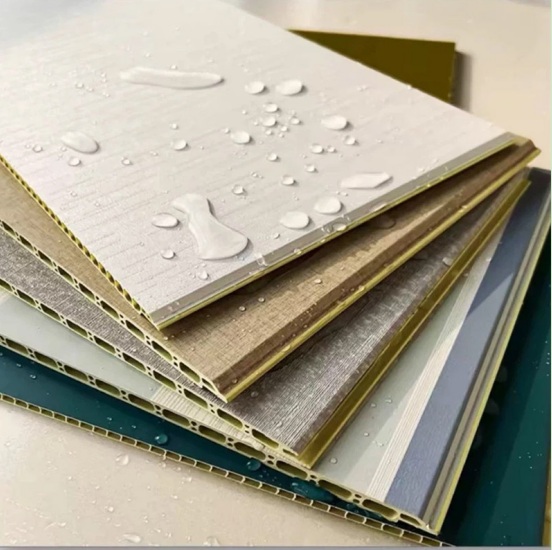
Fire Resistance Rating
For many commercial builds, fire rating is not only a safety step. In many cases, it is required by law. The need depends on the building type and how the space is used.
WPC wall panels are often sold with a B1 fire retardant grade. This follows the China GB8624 standard. It is treated as equivalent to C-s3,d0. The panel has been checked in tests for flame spread. It has also been checked for smoke release.
Hotels, office towers, and public facilities often ask for this fire performance. The right specification early on can avoid costly changes or problems later in the process.
Installation Quality
Even a premium panel with ideal specifications can underperform if installation is done poorly. Two common installation methods — click-lock systems and adhesive bonding — each have specific requirements for wall preparation.
Insufficiently even wall surfaces, inadequate curing times for adhesives or panels with sufficient gaps for expansion can cause separation, warping or premature wear, regardless of the spec for the panel’s base. A proper preparation of the substrate and adhering to instructions for installation by the manufacturer is essential to the longevity of performance as the specifications of the material themselves.
Environmental and Usage Conditions
Finally, day-to-day conditions influence how a panel ages over its service life:
In addition, the conditions of the day affect how the panel ages throughout its lifespan:
- The humidity levels in the installation area influence long-term exposure to moisture
- Direct sunlight accelerates surface fading over time
- Cleaning methods — a damp cloth is sufficient; abrasive cleaners or high-pressure washing can damage the surface finish
None of these factors alone will drastically shorten a panel’s life, but combined with a mismatched spec choice, they compound faster than expected.
How to Choose the Right Spec for Your Project
- Residential accent walls: 5–8mm, standard surface finish is typically sufficient
- Kitchens or humid areas: prioritize moisture-resistant grades, avoid direct-water zones
- Commercial corridors and hotels: 11-18mm thickness with B1 fire rating is usually advised
- Rooms facing south or high-sunlight zones: prioritize panels with UV-stable coatings on the surface.
The most effective WPC wall panel isn’t necessarily the tiniest or most expensive choice, but rather one whose specifications meet your needs. When looking for a supplier be sure to look beyond the appearance and cost to assess the composition of the material, thickness the surface finish, fire resistance, moisture resistance as well as the documentation that substantiates its quality.
For residential, commercial and hospitality projects prioritizing long‑term durability, Chongqing Huigong’s WPC wall panels are a practical choice. Customized specifications and a variety of specifications are offered, and customers are able to request samples for inspection of the quality prior to ordering bulk quantities. Make sure to select the right panels based on the location of installation, wear expected and the local requirements for building to ensure long-term reliability.e test results upon demand, consider it as a red alert rather than an oversight.